Samedi 19-mercredi 23 juillet 2014
Nous
partons de Padstow à 10 h quand ils ouvrent la porte du port.
Bonne
météo pour sept jours: vent ouest, 3-4, tournant est en fin de période. On ne peut pas souhaiter
mieux, donc on y va. Le navigateur indique 460 miles nautiques (828 km) à faire
et plus de 99 heures. Il ne peux pas marquer plus de temps, le compteur
s’arrête à 99.
Nos voisins partent juste après nous et nous les
voyons longtemps, un peu derrière nous, avec leurs voiles rouges.
Il n’y a
pratiquement pas de vent et nous allons au moteur. Nous pouvons lire le journal
et,
coïncidence, l’article voyage du Guardian
d’aujourd’hui est sur Bergen.
Nous
longeons la côte du sud-ouest de l’Angleterre. Vers 20 h, nous passons le phare de
Bendeen, près de Lands End, la pointe sud-ouest de l’Angleterre. Nous voyons
des ruines industrielles, avec murs et cheminées, mines ou usines abandonnées.
Quand il fait nuit, nous devinons les lueurs des Iles Scilly, à droite. De
nombreux bateaux passent dans tous les sens, tous ont AIS, nous les “voyons”
bien et ils nous “voient” aussi.
La nuit est très tranquille. A 21 h, nous commençons
nos quarts. Jens barre et je me couche, puis nous changeons toutes les deux
heures jusqu’à 9 h du matin. Cela fonctionne très bien et nous appliquerons ce
rythme les autres nuits aussi (sauf la dernière). Nous mangeons bien, trois
vrais repas par jour et, luxe des luxes, nous nous lavons!
Le dimanche, le vent augmente un peu et nous allons à
la voile. Nous allons à 4 nœuds (7,2 km/h), nous pouvons lire et faire des
sudokus. Nous écoutons la radio, la BBC a de bonne émissions. J’écoute aussi
France-Inter, “Maman, les petits bateaux” à 19 h 30.Le soir, Jens voit un long
bout de plastique jaune qui traine derrière nous. Il est accroché au
gouvernail, pas à l’hélice, heureusement. Tant que nous avançons, il n’y a pas
de problèmes, il flotte derrière nous. Mais si
nous nous arrêtons il peut se prendre dans l’hélice. Nous le trainons jusqu’à la
dernière nuit mouvementée, où il se décroche tout seul.
Le lundi, même beau temps, encore plus calme, nous
combinons moteur et voiles. La mer, par
moment, est lisse, pas le seul petit frémissement. Ce ne doit pas étre souvent
que la Baie de Gascogne (de sinistre réputation parmi les marins) est si calme.
Nous voyons nettement sur la carte électronique où le fond passe de 200m de
profondeur à 2000, 3000 et même 4000 mètres. A 9 h 30, un grand navire transportant
des containers, change son cap de un ou deux degrés pour ne pas nous gêner.
Nous admirons, vers 10, des dauphins jouer autour de Maja. Toujours calme, je
commence un livre, acheté d’occasion 50 pences à Inverness: “The Bells of
Scotland Road” de Ruth Hamilton. Ce n’est pas
de la haute littérature mais cela fait bien passer le temps. La nuit, quand je
suis de quart, je lis avec une lampe électrique, et les deux heures passent
rapidement.
A midi Jens envoie notre position à Nina par le sattelite-tléphone et nous allons faire cela chaque jour à midi.
A midi Jens envoie notre position à Nina par le sattelite-tléphone et nous allons faire cela chaque jour à midi.
A 13 h 30, toujours le lundi, nous avons fait la
moitié du chemin: le navigateur marque 225 miles à faire et le compteur marque
225 miles parcourus. On a navigué 51 heures.
Tout va bien. L’après-midi, je fais une sieste puis Jens en fait une aussi. Le
bateau ne bouge pas beaucoup et Jens décide, le lundi soir, de faire une pizza.
Pour ne pas être en reste, je fais une salade. Bon diner, dehors, avec la table
mise, au soleil. La seule concession aux mouvements (légers) de Maja, est que
nous mangeons la pizza et la salade dans des bols. Après diner, un grand banc de
dauphins nous offrent un spectacle de toute beauté. Je peux même les
photographier sous l’eau.
Nuit très calme entre lundi et mardi. Le vent tourne est comme prévu mais reste faible. Nous changeons
exactement toutes les deux heures. Mardi
matin, longue période de solitude, on ne voit que la mer, pas un bateau, ni en
vrai, ni sur l’écran. Le vent (est) force un peu, force 3-4, et nous allons à la voile. Maja
bouge un peu. Dans l’après-midi, nous croisons deux voiliers, les premiers que
nous voyons. L’un va au sud-ouest et l’autre
au nord-ouest.
En fin de
soirée, le vent force encore, toujours d’est. J’ai le mal de mer et arrive à
garder une pillule. Le diner, une soupe, ne passe guère. La nuit tombe, le vent
force et les vagues augmentent. J’essaye de prendre mon quart, de 23 h à 1 h du
matin, mais je ne tiens qu’une heure. Je réveille Jens en sursaut vers minuit:
je ”vois” un bateau sur l’écran, tout près, mais je ne le vois pas en vrai! J’ai
l’impression qu’on va se rentrer dedans, dans le noir et avec ces vagues. Jens
ajuste l’échelle du navigateur et me rassure, le bateau est à 2 miles nautiques
(3,6 km). Il prend et je suis ”aux
abonnés absents” toute la nuit. Le vent
est vraiment fort, l’anémomètre marque 14 m/s dans les rafales. 14
mètres/secondes, cela veut dire force 7! Les vagues, courtes et puissantes,
n’ont pas eu le temps de se former et restent moyennes. Heureusement, le vent
est d’est, c’est le vent d’ouest qui fait les grandes déferlantes de la Baie de
Gascogne. Il
fait beau, le ciel est étoilé et Jens pense que cela ne va pas durer. Jens est
calme, confiant et cela me rassure. Maja va bien, elle avance comme une
locomotive. Jens réduit le foc et lâche un peu la grand-voile quand nous gitons
trop. Moi, avec mon imagination fertile, je me dis: “Et si cela augmente
encore?” Je suis mal, et la nuit semble
longue. Jens s’assoupit par moment et moi, après des heures de peur, je finis
par m’endormir vers 6 h du matin, le mercredi. Je dors une heure et quand je me
réveille, à 7 h, le vent est retombé, les vagues se calment et nous sommes à quelques heures de
l’arrivée. Ouf! Jens voit la terre vers 7 h. Un bon petit-déjeuner nous
requinque, puis Jens va se reposer une heure.
Nous arrivons à Ares à 13 h. Il y a deux autres
marinas à A Coruña, mais notre guide recommande celle de Ares, sympa et plus
locale.
Nous sommes très heureux d’arriver.
We start from Padstow at 10 am when they open the harbor gate.
The weather forecast is good for seven days: west wind, 3-4, turning east in the end. We can not wish better, so here we go. The chart plotter shows 460 nautical miles (828 km) to go and more than 99 hours. It can’t write a longer time, the counter stops at 99.
Our neighbors leave just after us and we see them a long time, a little behind us, with their red sails.
There is virtually no wind and we motor. We read the newspaper and, coincidentally, the travel section of The Guardian today is about Bergen.
We navigate along the coast of south-west England. At 8 pm, we pass the lighthouse Bendeen near Lands End, the southwestern tip of England. We see industrial ruins, with walls and chimneys, abandoned factories or mines. When it's dark, we can guess the glow of Scilly Islands on the right side. Many boats go in all directions, all have AIS, we "see" them well and they "see" us as well.
The night is quiet. At 9 pm we begin our watches. Jens is steering and I go to bed, then we change every two hours until 9 am. This works very well and we apply this rythme the other nights too (except the last one). We eat well, three meals a day and luxury of luxuries, we can wash ouselves!
On Sunday, the wind increases a little and we'll sail.Our speed is 4 knots (7.2 km / h), we can read and do sudokus. We listen to the radio, the BBC has good programs. I also listen France-Inter, "Maman, les petits bateaux" (a program for children) at 7:30 pm.In the evening Jens sees a long piece of yellow plastic lagging behind. It is attached to the rudder, no to the propeller, fortunately. As we move forward, there is no problems, it floats behind us. But if we stop it may get caught in the propeller. It hang out until the last eventful night, when it detached itself and got lost.
Monday, same weather, even more quiet, we combine motor and sail. The sea, at times, is smooth, not one little shudder. It is not so often that the Bay of Biscay (notorious among sailors) is so quiet. We clearly see on the screen where the bottom goes from 200m depth to 2000, 3000 and even 4000 meters deep. At 9:30 am, a large ship carrying containers, changes its course by one or two degrees so we can keep our course. At 10 am we admire dolphins playing around Maja. At noon, Jens sends our position to Nina by the sattelite-phone, and we are going to do that every day at noon. Always quiet, I can read and start a book, bought used for 50 pence in Inverness: "The Bells of Scotland Road" by Ruth Hamilton. This is not high literature but it helps to pass time. At night, when I watch, I read with a flashlight, and the two hours pass quickly.
At 1:30 pm, on Monday, we are halfway: the plotter shows 225 miles to go and the counter shows 225 miles traveled. We sailed 51 hours. All is well. In the afternoon, I take a nap and then Jens makes one too. The boat does not move much and Jens decides on Monday night to make a pizza. Not to be outdone, I make a salad. Good dinner, outside, with the table sett,in the sun. The only concession to Maja’s (light) movement is that we eat pizza and salad in bowls. After dinner, a large shoal of dolphins offer us a beautiful sight. I can even take pictures of them underwater.
Quiet night between Monday and Tuesday. We change exactly every two hours. Tuesday morning, long lonely time, we only see the sea, not a boat, neither in real life, or on the screen. The wind strengths a little, force 3-4, and we'll sail. Maja moves a little. In the afternoon, we meet two sail boats, the first we see. One goes south-west and the other north-west.
By late evening, the wind strengths even more. I get seasick and manage to keep a pill. Dinner, a soup, does not go down well. Night falls, the wind forces and the waves increase. I try to take my watch from 11 pm to 1 am, but I do only one hour. I wake up Jens abruptly at around midnight: I "see" a boat on the screen, close, but I do not see it in real life! I have a feeling we will crash into it in the dark and with these waves. Jens adjusts the scale of the plotter and reassures me, the boat is at 2 nautical miles (3.6 km). He takes the wheel and I'm out all night. The wind is really strong, the anemometer registers 14 m / s in gusts. 14 meters / second means force 7! The waves, short and powerful, didn’t have time to form and remain averages, not so big. Fortunately, the wind is from the east, it is the wind from the west which makes the great breakers of the Bay of Biscay. It is nice weather, the sky is clear with many stars and Jens thinks it will not last. Jens is calm, confident and it reassures me. Maja goes well, she moves like a locomotive. Jens reduces the jib and looses the mainsail a bit when she is heeling too much, but with my imagination, I think: "What if the wind forces even more?” I am not well and the night seems long. Jens dozes at times and I, after hours of fear, fell asleep at around 6 am on Wednesday. I sleep an hour and when I wake up at 7 am, the wind is much quieter, the waves smaller and we are a few hours from our place of arrival. Whew! Jens sees land at around 7 am. A good breakfast gives us back strength and moral and Jens can rest for an hour.
We arrive at Ares at 1 pm. There are two other marinas
in A Coruña, but our guide recommends Ares, friendly and local.
We are very happy to arrive.

19.07. 10 h 30
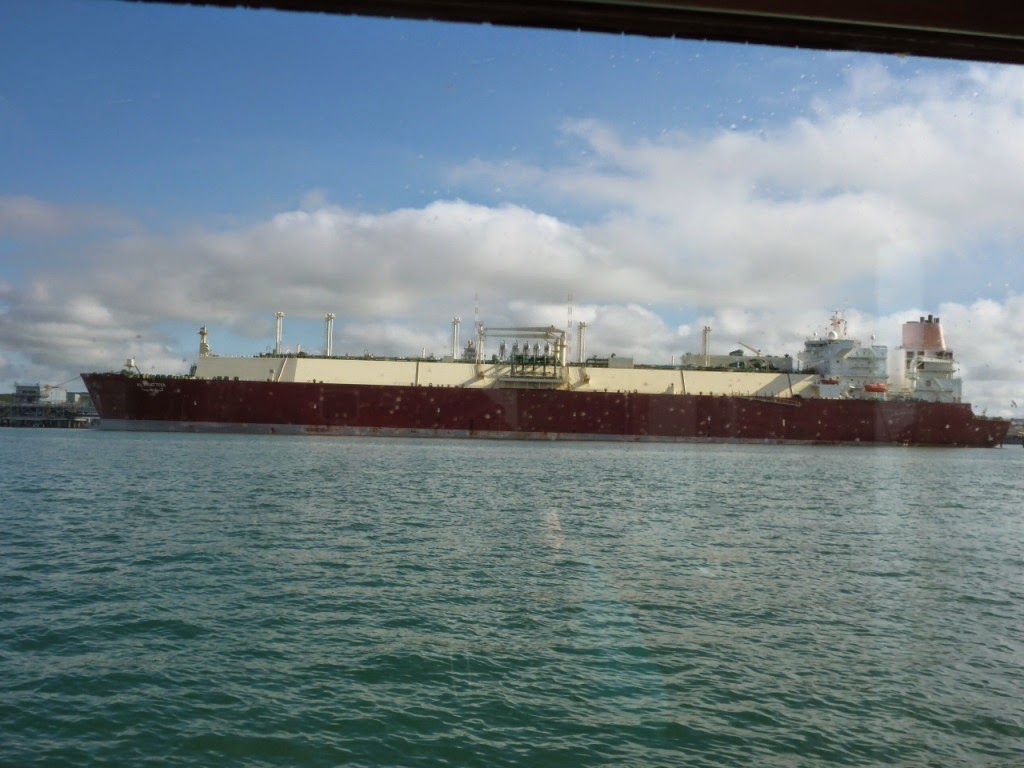
Le bateau de nos voisins
Our neighbors' boat

19.07. 11 h
Il faut faire attention aux casiers à homard
We have to be carefull with the lobsters pots

19.07. 19 h 30
Phare de Bendeen
Bendeen light house

19.07. 19 h 45
Ruines industielles, près de Lands End
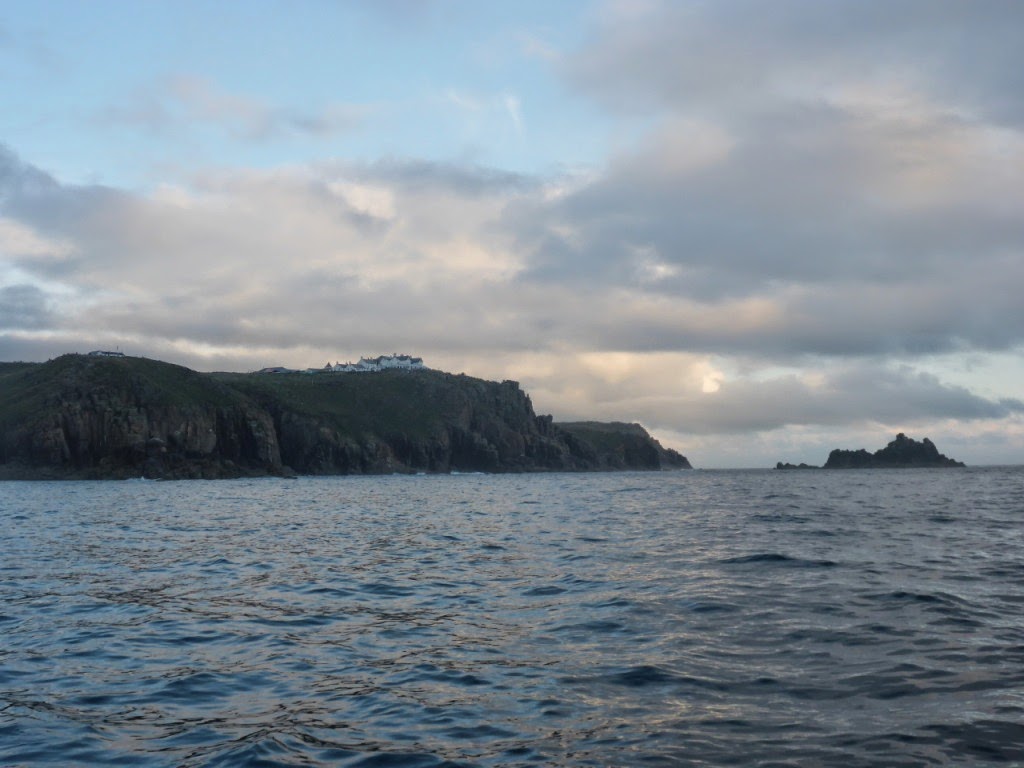
19.07. 20 h
Lands End

19.07. 23 h
Un bateau de croisière, tout illuminé, passe
A lighted cruise ship passes

19.07.24 h
On voit de nombreux bateaux sur l'écran
We can see many boats on the screen

20.07. 9 h
Jens vérifie le moteur
Jens is checking the motor

20.07. 19 h
Soupe

21.07. 8 h
Beau temps
Nice weather

21.07. 9 h
Je fais du thé
I am making tea

21.07. 10 h
Mer calme
Quiet sea

21.07. 11 h
Bleu: profondeur 200 m. Blanc: profondeur: 3000m, 4000 m
Blue: 200 m deep. White: 3000, 4000 m deep

21.07. 10 h
Le bout de plastique jaune
The piece of yellow plastic

21.07. 10 h
Dauphin
Dolphin

21.07. 13 h 30
Il reste 225 miles nautiques (405 km) à faire
We have 225 nautical miles (405 km) to do

21.07. 13 h 30
Nous avons fait 225 miles
We have done 225 miles

21.07. 13 h 30
Nous sommes à la moitié
We are halfway
21.07. 18 h 30
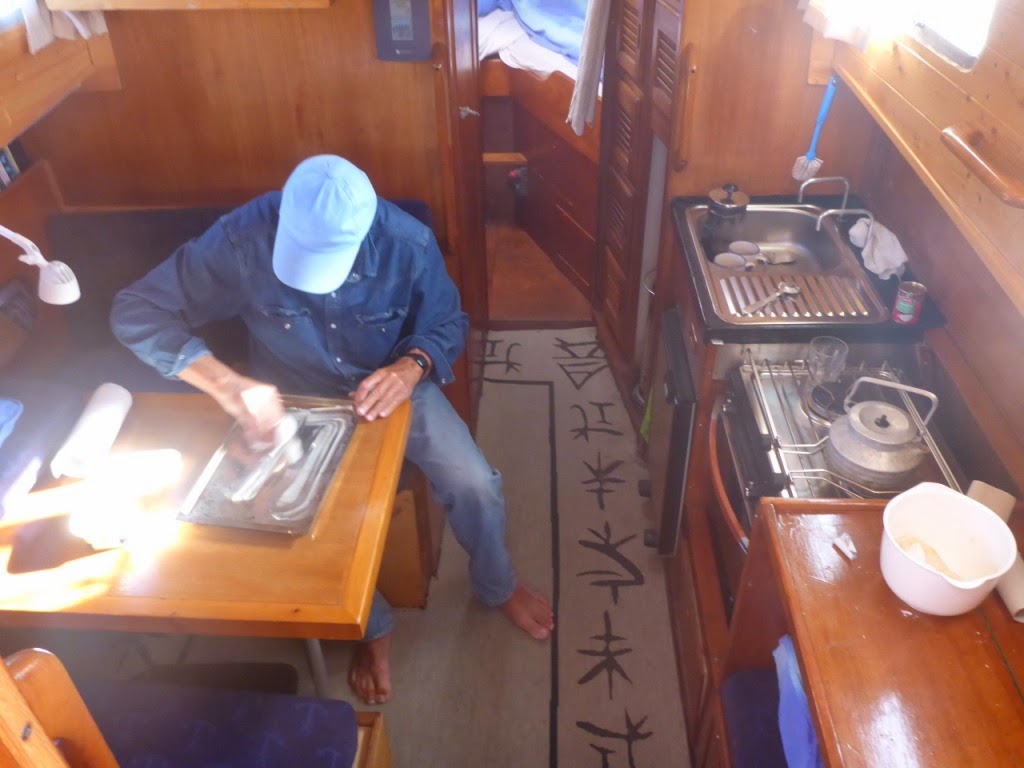
Jens fait une pizza
Jens is making a pizza

21.07. 19 h
Je fais ma vinaigrette
I make a vinaigrette

21.07.19h 30
Diner
Dinner

21.07. 20 h
Mer calme
Quiet sea

21.07. 20 h 30
Dauphins
Dolphins

22.07. 9 h
Tout est bien calé avec des rouleaux (vides) de papier de toilette
Everything is well secured with (empty) rolls of toilet paper

22.07. 9 h
Le même
The same

22.07. 14 h
On voit un voilier
We see a sail boat

23.07. 7 h
Terre!
Land!

23.07. 12 h
Je hisse le pavillon de courtoisie espagnol
I raise the Spanish guest flag

23.07.13 h
Marina de Ares

23.07. 14 h
Nous déjeunons sous notre "bimini", fait maison
We eat lunch under our home made "bimini"
23.07. 15 h
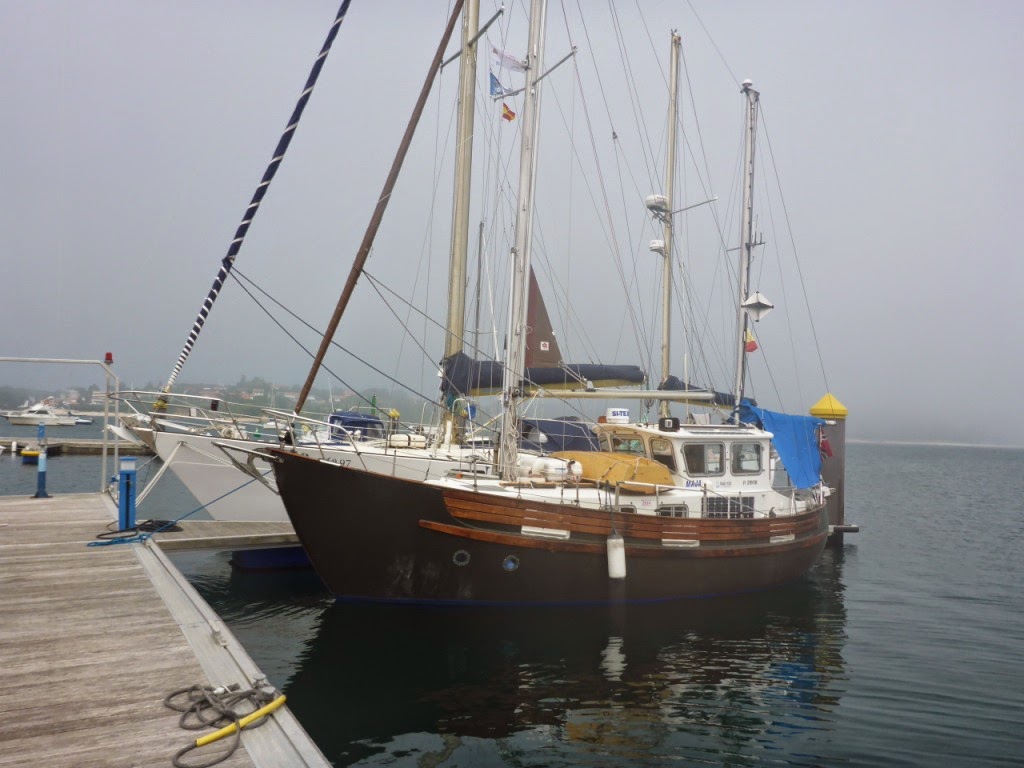
La brume arrive
It is becomning misty