Mercredi 14 juin 2017
Nous partons à 5 h 45,
Jens a calculé que le meilleur moment pour passer le Raz de Sein est à 13 h 30,
le courant sera alors avec nous. Nous pensons ensuite aller au port de Camaret
que nous connaissons de 2012. Je suis désolée mais je n’ai pas de photo bye,
bye, la batterie de l’appareil photo étant à plat. C’est très calme mais nous
avons un courant contre nous toute la matinée et nous accélérons un peu, 1800
tours/minutes alors que normalement nous allons à 1400 t/m.A 8 h, je note que
le vent est 2m/s (c’est insignifiant) et la houle de 50 cm. Idéal pour
Jeannette. Nous pouvons lire, écrire, faire un sudoku … A 9 h, nous passons le
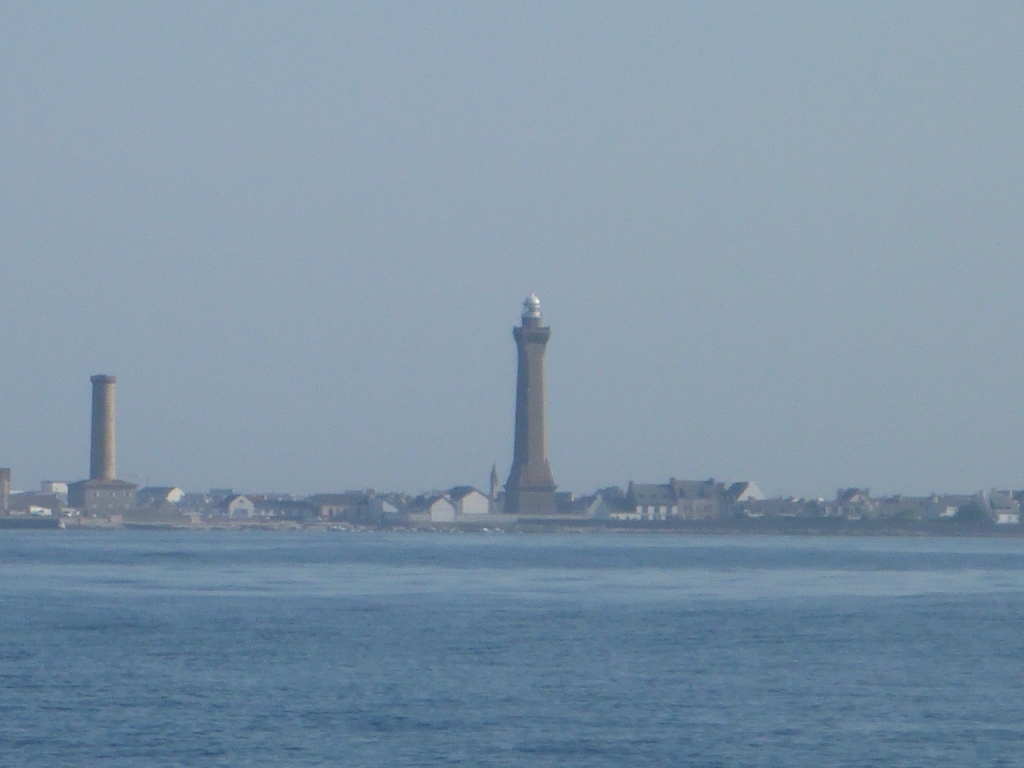
phare de Eckmül, phare très puissant qui marque la Pointe de Penmarc’h. Nous
apercevons des dauphins mais ils sont trop loin pour faire une photo. Tout va
bien, si bien que je dis à Jens : « Et si on continuais après le Raz
de Sein, on pourrait passer le Chenal du Four aujourd’hui ? » La pointe de la Bretagne a deux passages
difficiles, le Raz de Sein et Le Chenal du Four, plus au nord. Jens regarde encore
la météo, les marées et les courants et en conclut que ce serait une bonne
idée, plutôt que de s’arrêter à Camaret et repartir dans un ou deux jours pour
passer le Chenal du Four. La météo est exceptionnellemnt calme, il faut en
profiter. Nous nous approchons du Raz de Sein quand nous entendons un appel à
la radio : « Motorsailer aux voiles rouges à la Pointe du Raz ».
D’abord on ne croit pas que c’est pour nous, mais le message est répété deux
fois et il n’y a pas d’autres motorsailers dans les parages. Je répond donc : « Ici
motorsailer Maja ». Le gars dit qu’il a un service à nous demander, il a
des problèmes de moteur, il n’y a pas de vent et il nous demande si on pourrait
le remorquer pour passer le Raz de Sein. Je regarde Jens qui fait oui de la
tête. Donc nous nous approchons de ce bateau qui a des voiles oranges et
prenons une corde qu’ils ont préparée et nous voilà partis. Cela va bien, c’est
un bateau léger et le courant nous pousse, nous allons à 6 nœuds. Le « timing »
est parfait, nous devions être ici à 13 h 30 et nous y sommes. Ce n’est pas
banal de passer le Raz de Sein en remorquant un autre bateau. Et autre fait peu
banal, nous croisons un Fisher 37 anglais juste quand nous passons le Raz. Nous
nous faisons de grands signes de bras. Nous lâchons notre remorqué après être
passés, il y a un tout petit peu de vent et il peut avancer. Il nous remercie
bien, nous échangeons nos cartes et nous continuons donc vers le nord. Je
descend en bas et fais le blog, je peux écrire, pas de problème. Nous passons
le Phare de la Pointe Saint Mathieu qui marque l’entrée par le sud du Chenal
du Four. Ce chenal est long, 12 miles nautiques ( 21 km), mais le courant est
très fort seulement où le chenal est le plus resserré, à peu près 20-25 minutes.
Et c’est bien assez, car même avec ce temps si calme, nous avons l’impression d’être
emmenés par une rivière, Maja va à plus de 8 nœuds. L’eau bouillonne, fait des
(petits) tourbillons, cela nous rappelle les courants de la mer d’Irlande. Je
vais en bas continuer mon blog, cette eau agitée ne me convient pas trop. Quand
nous passons le phare du Four, qui marque la fin du Chenal du même nom, c’est tout
calme mais nous avons encore un courant favorable raisonnable. Nous dinons en
route à 19 h et arrivons à l’Aberwrac’h à 21 h. Nous sommes très contents de
cette longue mais bonne journée et sommes soulagés d’avoir passer ces deux
points délicats si facilement.
Distance Iles de Glénan-L'Aberwrac'h: 82 mn/nm (147 km)
Total Bergen-L'Aberwrac'h: 9084 mn/nm + 82 mn/nm = 9166 mn/nm ( 16 498 km)
Wednesday, June 14,
2017
We leave at 5:45 am,
Jens has calculated that the best time to pass the Raz de Sein is at 1:30 pm,
the current will be with us. After the Raz we think of going to the port of
Camaret that we know from 2012. I'm sorry but I don’t have a photo bye, bye,
the camera battery being flat. It is very quiet but we have a current against
us all morning and we accelerate a bit, 1800 rpm while normally we go to 1400
rpm. At 8 o’clock, I note that the wind is 2m / s (it’s insignificant) and the
swell is 50 cm. Ideal for Jeannette. We can read, write, make a sudoku ... At 9
o'clock we pass the lighthouse of Eckmül, very powerful lighthouse that marks
the Pointe de Penmarc'h. We see dolphins but they are too far away to make a
picture. All is well, so I tell Jens: "And if we continued after the Raz de
Sein, we could pass the Chenal du Four today?” The point of Brittany has two
difficult passages, the Raz de Sein and Le Chenal du Four, further north. Jens
looks at the weather forecast, tides and currents and concludes that it would
be a good idea, rather than stop at Camaret and leave in one or two days to
pass the Chenal du Four. The weather is exceptional calm, we must take
advantage of it. We approach the Raz de Sein when we hear a radio call:
"Motorsailer with red sails at the Pointe du Raz". First we don’t
believe it's for us, but the message is repeated twice and there are no other
motorsailers around. I reply, "Here motorsailer Maja". The guy says
he has a service to ask us, he has engine problems, there is no wind and he
asks us if we could tow him to pass the Raz de Sein. I look at Jens who is
nodding. So we approach this boat that has orange sails and take a rope that
they have prepared and start our rescue operation. It goes well, it is a light
boat and the current pushes us, we go at 6 knots. The timing is perfect, we had
to be here at 1:30 pm and we are there. It’s not common to pass the Raz de Sein
towing another boat. And another unusual
fact, we meet an English Fisher 37 just when we pass the Raz. We wave at each
other. We drop our tow after passing the Raz, there is a little bit of wind and
he can sail. He thanks us, we exchange our cards and we continue north. I go downstairs and do
the blog, I can write, no problem. We pass the Lighthouse of Pointe Saint
Mathieu which marks the entrance by the south of the Chenal du Four. This
channel is long, 12 nautical miles (21 km), but the current is very strong only
where the channel is narrowest, about 20-25 minutes. And that's quite enough,
because even with this quiet time, we feel like being taken by a river, Maja goes
at more than 8 knots. The water bubbles up, makes (small) eddies, it reminds us
of the currents in the Irish Sea. I go down to my blog, this rough water doesn’t
suit me too much. When we pass the lighthouse of the Four, which marks the end
of the Channel of the same name, it is all calm but we still have a reasonable
favorable current. We dine en route at 7 pm and arrive at the Aberwrac'h at 9
pm. We are very happy with this long but good day and are relieved to have
passed these two delicate points so easily.

Bye, bye les Iles Glénan (sans drapeau)
Marque Spineg qui doit être passer par le sud
The Spineg mark which must be passed south
La même. Deux triangles pointés vers le bas: passer au sud
The same one. Two triangles pointing down: pass south
Ils pêchent, loin de la terre
They are fishing, far away from land
Phare de Eckmühl. Pointe de Penmarc'h
Direct vers le Raz de Sein
Direct towards the Raz de Sein
Jens vérifie que le moteur ne chauffe pas trop
Jens is checking that the engine is not too hot
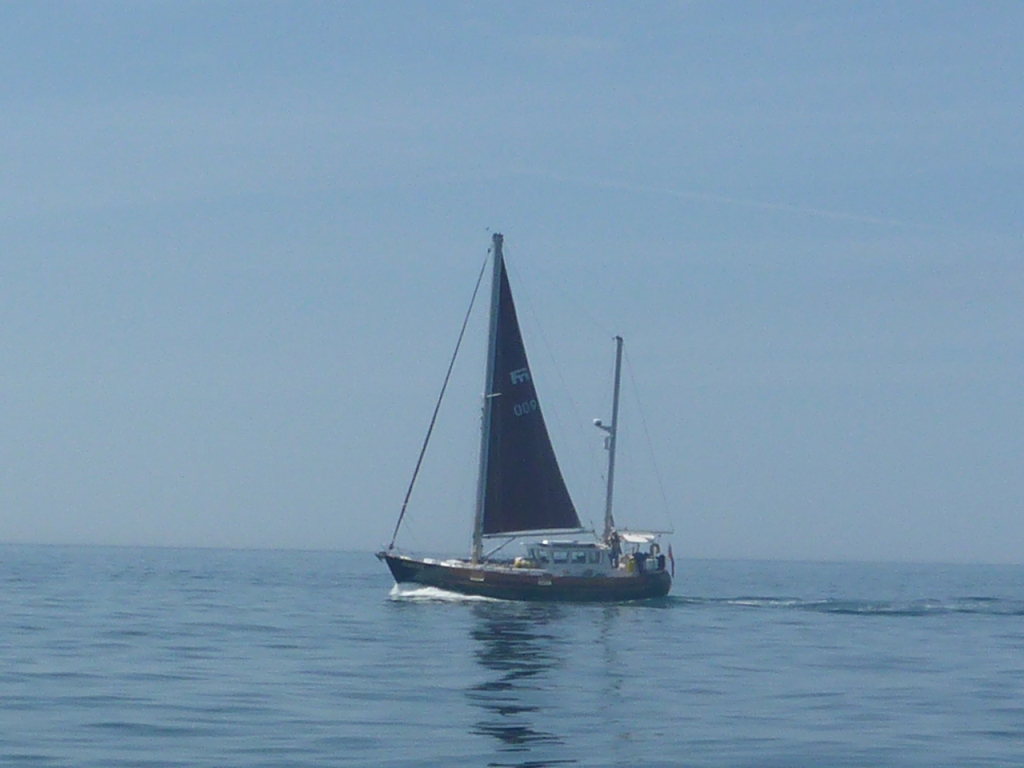
Nous remorquons un voilier
We are towing a yacht
Notre araignée a bien mangé aujourd'hui, un moustique et une mouche
Our spider ate well today, a moskito and a fly
Le/the Fisher 37
La Plate et La Vieille, les deux phares du Raz de Sein
La Plate and La Vieille, the two lighouses at the Raz de Sein
Nous lâchons notre remorqué
We let go our towed yacht
Le phare de Pointe Saint Mathieu, début du Chenal du Four
The Pointe Saint Mathieu lighthouse which marks the Chenal du Four entrance
C'est comme une rivière rapide
It's like a fast river
Maja va à plus de 8 noeuds
Maja goes with more than 8 knots
Et en plus il y a des cailloux
And in addition, there are rocks
Le phare du Four, fin du chenal
The Four lighthouse, end of the chenal
Notre diner
Our dinner
A l'entrée de L'Aberwrac'h, une marque s'appelle Le Petit Pot de Beurre
At L'aberwrac'h entrance a mark is called Le Petit Pot de Beurre
(the little pot of butter)
Un fort contre les Anglais et les pirates
A fort against the English and the pirates
Un ballon
A hot air balloon
Iles de Glénan-L'Aberwrac'h
14.06.2017. L'Aberwrac'h