Sunday, 2 November 2014

01.11.2014 Alvor

Samedi 1 er Novembre 2014

La météo est bonne pour au moins deux jours et beaucoup de bateaux vont partir: Francis et Yolande, Christophe et Céline et le couple belge avec les quatre enfants partent, ils vont tous ensemble à Portimão, un port un peu plus à l’est. Nous allons partir aussi mais seulement jusqu’à Alvor, un village au bord d’une sorte de lagune et où il faut ancrer. Le temps est si calme que c’est l’occasion ou jamais d’y aller. Jens va faire des courses pendant que je fais le blog d’hier, nous allons nous baigner, déjeunons et lisons le journal (un portuguais, avec un peu de mal et un espagnol pour suivre toutes les histoires de corruption!). Nous partons à 3 h pour arriver là-bas à 3 h 30 quand la marée recommence à monter. C’est un saut de puces, 2 MN ( 3,6 km). Tout va bien, la mer est calme, le ciel est bleu … Pas de problème pour rentrer entre les deux digues. Cette lagune est pleine de bancs de sable et il faut bien suivre un chenal. Deux bouées le marquent, une verte qu’il faut laisser à droite et un peu plus loin une rouge qu’il faut laisser à gauche. En principe, il faut suivre une ligne droite entre les deux bouées. Mais, les bancs de sable se déplacent. Déjà à la première bouée, Jens a un doute, plus on s’approche de la bouée plus la profondeur diminue. On la passe donc de l’autre côté. On se dirige vers la deuxième bouée quand, boum, on se plante dans un banc de sable! Jens essaye de mettre le moteur en avant, en arrière, rien à faire, Maja ne bouge pas. Nous voilà bien! Je n’aime pas ça, mais Jens me rassure: il n’y a pas de danger, c’est très calme et la marée monte, il n’y a qu’à attendre. L’écolode (l’appareil qui montre la profondeur) marque 60 cm! mais il faut ajouter 60 cm, donc c’est 1,2 m, mais Maja a un tirant d’eau de 1,4 m, le compte n’y est pas. Donc on attend. Quand l’eau monte et qu’on a l’impression qu’on flotte, Jens essaye encore d’avancer, mais non. En fait, on se remet encore plus dans le banc de sable. Nous mettons l’annexe à l’eau et Jens va sonder les alentours. Il s’aperçoit que devant, c’est peu profond mais qu’il faut partir vers la droite. Il a alors l’idée de faire pivoter le bateau, d’abord en le tirant avec l’annexe, projet qu’on abandonne très vite. Nous avons l’hélice transversale devant qui peut faire pivoter le bateau bien plus efficacement. Et cela marche, Maja pivote et se désensable. Nous sommes restés plantés là au moins une heure. En fait le banc de sable n’est plus du tout à la même place que sur la carte. Un pêcheur qui sortait nous a fait signe de la main pour aller beaucoup plus à droite. Le reste du chenal se passe bien  nous arrivons à Alvor juste avant la nuit, nous qui pensions arriver en une demi-heure. Au fait, alvor en norvégien veut dire “sérieux”. Nous ancrons et l’ancre tient. L’ankerdram (le petit verre de l’arrivée) semble bon après toutes ces émotions. 
     
Saturday, November 1st, 2014

The weather is good for at least two days and a lots of boats are leaving, Francis and Yolande, Christophe and Celine and the Belgian couple with four children leave, they all go together to Portimão, a port a little further east. We will also leave but only to Alvor, a village on the edge of a kind of lagoon and where we must anchor. The weather is so quiet that it's now or never to go there. Jens goes shopping while I'm write yesterday's blog, we go swimming, lunch and we read the paper (a Portuguese one, with a little difficulty and a Spanish one to follow the stories of corruption!). We leave at 3 pm to get there at 3:30 pm when the tide begins to rise. It is a very short distance, 2 MN (3.6 km). All goes well, the sea is calm, the sky is blue ... no problem to go between the two piers. This lagoon is full of sandbanks and one must follow a channel. Two buoys mark it, a green should be left to the right and a little further a red should be left to the left. In principle, we should follow a straight line between the two buoys. But sandbars move. Already at the first mark, Jens has a doubt, the closer we get to the buoy the more depth decreases. He thus passes from the other side. We are heading towards the second buoy when, boom, we run into a sandbank! Jens tries to put the engine  forward, backward, nothing to do, Maja does not move. We are really stuck! I do not like it, but Jens reassures me: there is no danger, it is very quiet and the tide rises, it is just to wait. The depth sounder marks 60 cm! But we must add 60 cm, so it is 1.2 m, but Maja has a draft of 1.4 m, so, no doubt, there is a problem. So we wait. And when we feel that we are floating, Jens tries again  to move, but no. In fact, we go further into the sand. We put the tender onto the water and Jens will probe the area. He realizes that it is shallow in front of us, we must go to the right. He then has the idea to rotate the boat, first by pulling her with the tender, but this  project is abandoned very quickly. We have a bow thruster that can rotate the boat more effectively. And it works, Maja pivots and is free. We were standing there at least one hour. In fact, the sand is not at all at the same place in reality and on the map. A fisherman who passes by signals us to go much more to the right. The rest of the channel presents no problem, we reach Alvor just before dark, it took us almost three hours to come. By the way, alvor means “serious” in Norwegian. We anchor and the anchor holds. The ankerdram (small glass of arrival) feels good after all these emotions.


Nous sortons de la marina
We are on our way out of the marina


Bye, bye Lagos


L'entrée de la lagune de Alvor
Alvor's laguna entrance


La chenal
The channel


2,1 m, cela va
2,1 m, it's OK


1,4 m, ce n'est guère
1,4 m, it's not much
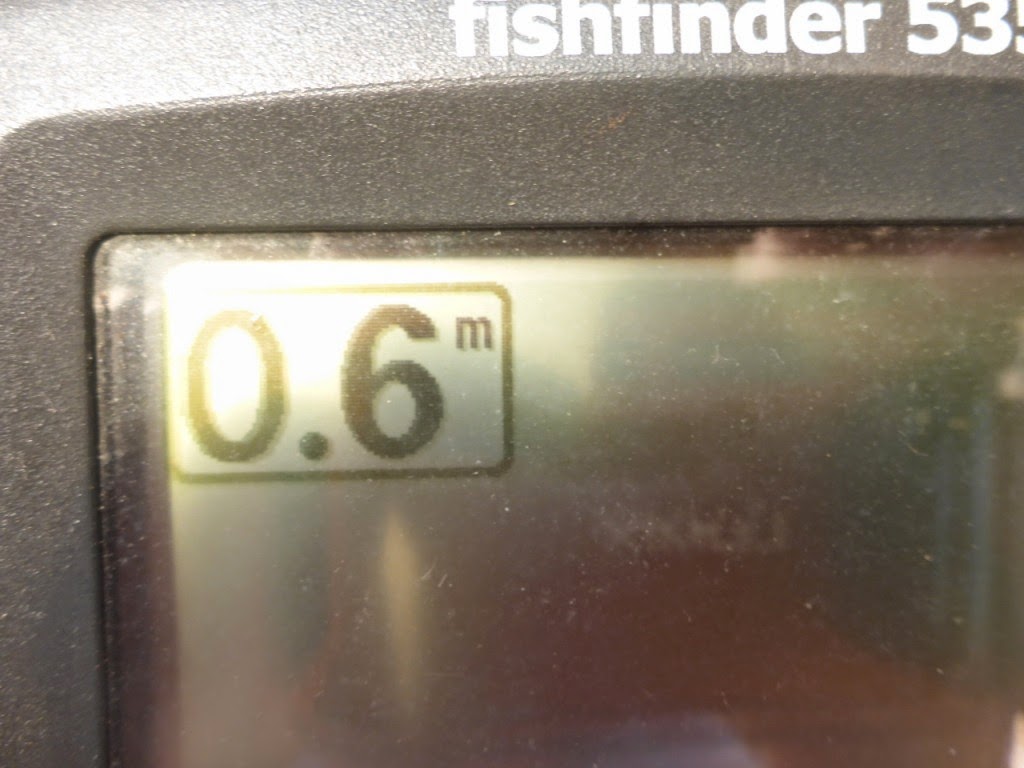

0,60 m, on est planté
0,60 m, we are stuck
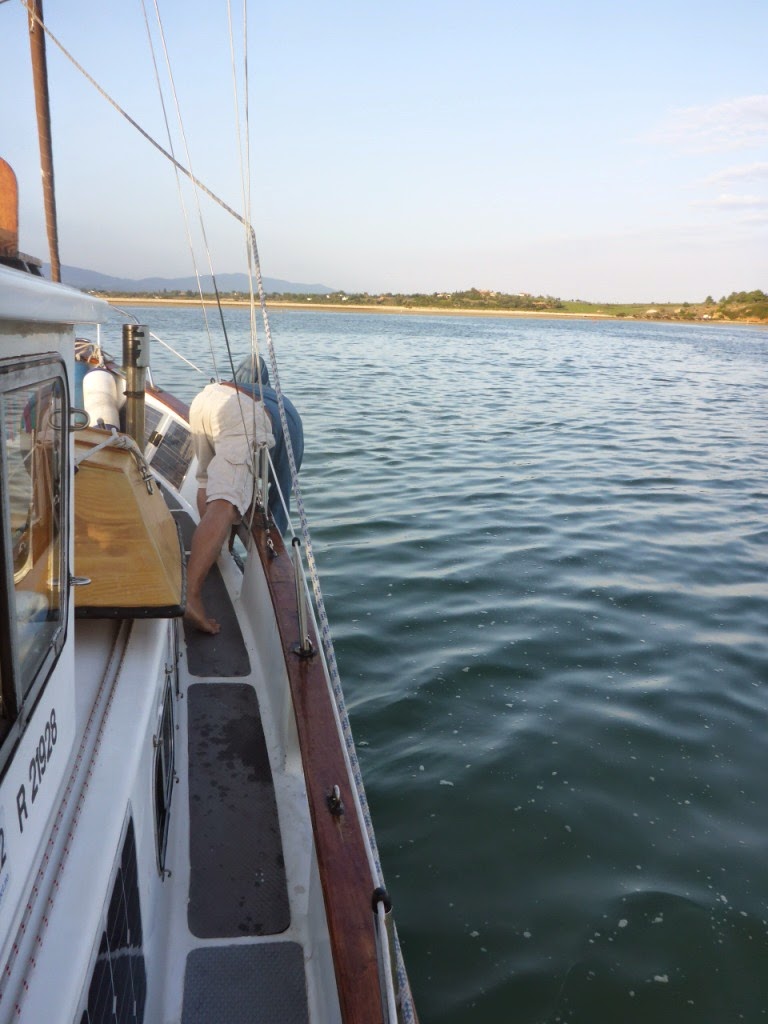

Jens sonde la profondeur
Jens is sounding the depth


Jens sonde autour de Maja
Jens is sounding around Maja


Jens essaye de faire pivoter Maja
Jens is trying to make Maja turn


A l'ancre devant Alvor
Ancored in front of Alvor


Carte de la lagune de Alvor
Map of Alvor laguna


Photo aérienne de la lagune
Arial picture of the laguna


Photo prise hier dans le jardin de Pia
Picture taken yesterday in Pia's garden


Saturday, 1 November 2014

31.10.2014 Lagos

Vendredi 31 Octobre 2014

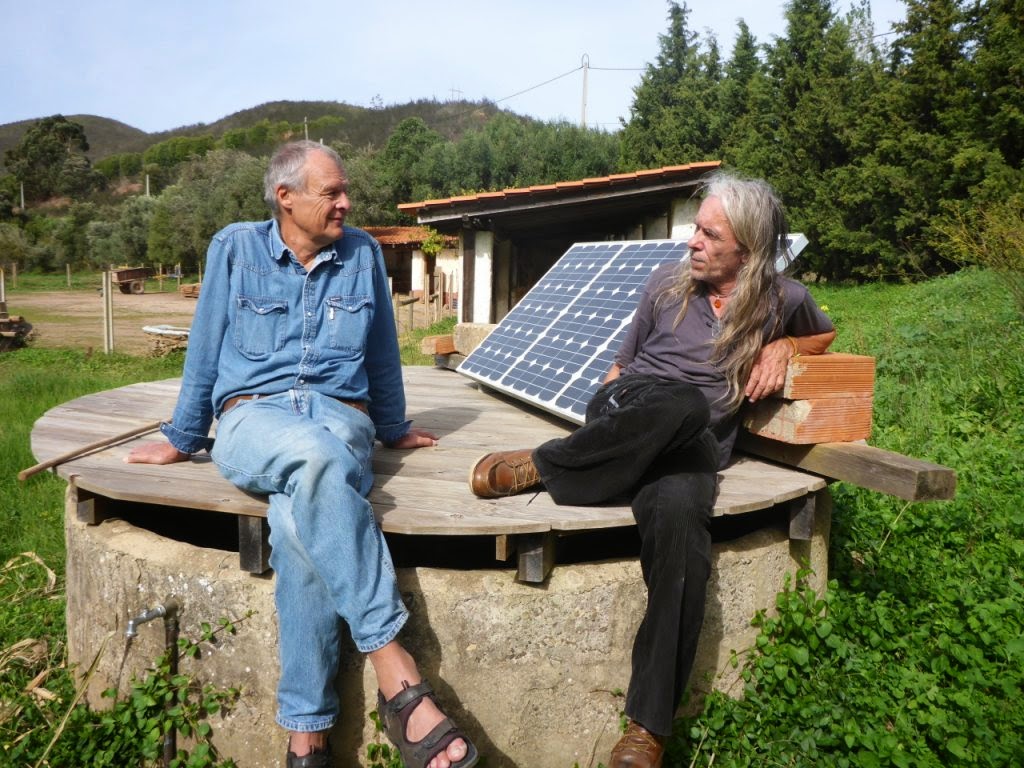
Aujourd’hui nous allons visiter, en bus, le père de Carlos. Celui-ci est un ami de Thorsten et Laila (et il a même travaillé comme remplaçant à mon petit jardin d’enfants!) dont le père vit au Portugal. Laila m’a donné un numéro de téléphone et Jens a pris contact avec lui et il nous attend. Nous prenons donc le bus, juste en face la marina, à 8 h 45 pour Aljezur, une petite ville à une trentaine de km d’ici. Nous traversons des bois de chênes-liège, tout “déplumé” de leur écorce et des villages tranquilles. Markus, c’est le nom du père de Carlos, nous attend à l’arrêt du bus à Aljezur. Nous prenons un café ensemble et montons dans son vieux 4x4, genre jeep. Il habite à quelques km de Aljezur. Il faisait partie d’un groupe de jeunes Allemands qui, dans les années quatre-vingt, avaient établi une sorte de communauté ici au Portugal. Ils avaient acheté un grand domaine abandonné et s’étaient installés là. Ils avaient retapé des vieilles maisons et même construit de nouvelles. Il y a de l’eau en abondance, rivière et puits, mais il n’y avait pas l’électricité. Des enfants sont nés et ont grandi ici. Markus et sa compagne ont envoyé Carlos à l’école du village, ainsi il a appris le portuguais et a connu “l’autre monde”. Maintenant les jeunes sont partis mais au moins un nouveau couple jeune vit ici avec leur trois enfants, ils vivent dans des yourtes, une sorte de tente ronde de Mongolie. Markus et nous parlons bien ensemble, il s’intéresse au bateau et nous à cette vie communautaire. Sa maison est très bien située, avec une belle vue sur une montagne et, par chance, même l’hiver le soleil passe juste au dessus de la montagne. Le domaine est immense et nous allons voir les yourtes, une autre maison où un homme est en train de changer le moteur d’une Caravelle (Jens connait ça!) et allons visiter sa sœur Pia qui vit de l’autre côté de la rivière. Son compagnon, Walter, est français et cuisinier: il propose de faire un couscous, un de mes plats favoris. Nous déjeunons donc tous les cinq, dehors, il fait très beau et le couscous végétarien est excellent. Markus nous emmène ensuite visiter une autre maison où un homme a des abeilles et vend du miel et nous achetons un pot de miel. Le temps passe et bientôt il est temps de reprendre le bus, Markus nous emmène à Aljezur. Merci à lui et ses compagnons pour cette bonne journée passée dans un milieu si différent des marinas. Nous espérons qu’il pourra venir nous voir au bateau, tant que nous sommes en Algarve.
  
Friday, October 31, 2014

Today we visit by bus, Carlos’ father. Carlos is  a friend of Thorsten and Laila (and he even worked as a substitute in my little kindergarten!) whose father lives in Portugal. Laila gave me a phone number and Jens contacted him and he awaits us. We take the bus at the bus station just opposite the marina, at 8: 45 am to Aljezur, a small town about thirty km from here. We pass through oak cork forests, where the trees are "peeled" from their bark and quiet villages. Markus (it is the name of Carlos’ father), is expecting us at the bus stop in Aljezur. We have coffee together and got into his old 4x4, a kind of jeep. He lives a few km from Aljezur. He was part of a group of young Germans who, in the eighties, had established a kind of community here in Portugal. They had bought a large abandoned estate and settled there. They renovated the old houses and even built new ones. There was no problem with water, a rivers and wells gave more than necessary, but there was no electricity. Children were born and raised here. Markus and his partner sent Carlos to the village school, and he learned Portuguese and  seen the "other world." Now young people are gone but at least one new young couple is living here with their three children, they live in yurts, a kind of round tent from Mongolia. Markus and us talk well together, he is interested in boat and we are interested in this community life. His house is very well located, with a beautiful view of a mountain and, luckily, even in winter the sun passes just above the mountain. The area is huge and we walk to see the yurts, another house where a man is changing  a Caravelle’s engine (Jens knows that!) And we are going to visit his sister Pia who lives on the other side of the river. Her companion, Walter, is French and cook, and proposes to make a couscous, one of my favorites dishes. We have lunch the five of us outside, it is sunny and the vegetarian couscous is excellent. Markus takes us then to visit another house where a man has bees and sells honey and we buy a jar of honey. Time passes and soon it's time to take the bus, Markus drives us to Aljezur. Thank you to him and his companions to this good day in an environment so different from marinas. We hope he can come and see us at the boat, as we are in the Algarve for quite a time.


Le café à Aljezur


La maison de Markus
Markus' house


Une yourte
A yurt


Dans la yourte
In the yurt


Markus, Jens


La mule et les trois ânes
The mule and the three donkeys


Jens, Markus


La rivière
The river


Nous allons à une autre  maison
We are on our way to another house


Le gars change le moteur de cette Caravelle
The guy is changing this Caravelle's engine


Jens, Pia, Walter, Markus


Le couscous


La voiture de Markus
Markus' car


Une fleur dans le jardin de Markus
A flower in Markus' garden


Friday, 31 October 2014

30.10.2014 Lagos

Jeudi 30 Octobre 2014

Je vais me balader seule en ville, je veux voir l’ancien Marché aux Esclaves, mais il est fermé pour restauration. J’achète un livre sur les fleurs sauvages d’Algarve et me promène le long de la rivière. L’entrée du port n’a pas l’air sympathique aujourd’hui avec de grosses vagues qui roulent. Je me dis qu’aucun bateau ne va arriver par ce vent là. Erreur: un voilier rentre dans le port, je le vois quand je suis sur la passerelle et le prends en photo. Il veut se mettre au ponton d’accueil mais ne s’y prend pas bien, essaye plusieurs fois mais freine trop tôt et est repoussé loin du ponton par le vent. Une jeune fille est prête à sauter à terre mais ne peut pas, le bateau est toujours trop loin du ponton. Et personne n’est là pour les accueillir. N’écoutant que mon courage, je descends sur le ponton et attrape la corde que me lance la jeune fille et essaye de l’amarrer à une bitte d’amarrage, mais le vent pousse le bateau. Le bonhomme à la roue de ce bateau me crie de tirer plus fort! Moi, Jeannette, tirer un bateau de 10 tonnes! Je lui dit que c’est très dur et que s’il ne se tait pas, je lâche tout, non mais quand même! J’arrive à l’amarrer au milieu, j’attrape un bout devant, l’amarre aussi et un bout derrière. La jeune fille saute à terre et me remercie profusément, mais les deux (vieux) bonshommes ne me disent pas un mot. Je demande à la fille (qui est Suisse) comment s’est passé l’entrée au port. Elle me répond: ”Terrible, it was terrible!” et la pauvre elle en tremblait encore. Mais le “Capitaine” dit: “No problem”. Je les laisse et pars en souriant au comique de la situation: moi, une grand-mère, suis la seule qui suis allée les aider et le capitaine rouspète et veut que je tire plus fort!
Lunch au bateau puis tour en vélo à une autre plage, plus loin à l’est, Praia da Luz. Même scenario qu’hier, grosses vagues, Jens qui me tient par la main d’abord et lui qui y retourne seul. Retour à Maja et je vois une jeune femme que je crois reconnaitre mais d’où? Ça y est: c’est elle qui nous avait abordés dans le métro de Porto à Povoa de Varzim, nous avions marché ensemble entre la station de métro et la marina. Nous allons la voir, elle, son mari et leur fils de 4 ans. Ils sont allemands, ont pris un an pour naviguer et sont sympa. 

Thursday, October 30, 2014

I'm wandering alone in the city, I want to see the old Slave Market, but it is closed for restoration. I buy a book on wildflowers of Algarve and walk along the river. The entrance to the port does not look nice today with big waves rolling. I think that no boat will arrive with this wind. Error: a sailboat enters the harbor, I see it when I'm on the bridge and take a picture. The man on the wheel wants to come to the pontoon but does not do it well, tries several times but slows down too early and is pushed away from the pontoon by the wind. A young girl is ready to jump but can't, the boat is still too far from the pontoon. And no one is there to help them. Listening only to my courage, I go down to the pontoon and grab the rope that the girl throws at me and trie to tie it to a bollard, but the wind is pushing  the boat away. The guy at the wheel is yelling at me to pull harder! Me, Jeannette, how can I pull a boat of 10 tons! I tell him that it is very hard and if he does not stop yelling at me, I dropp everything! I want to help and he yells at me! I manage to tie a rope in the middle, I get one from the front, tie it, and  also a rope behind. The girl jumps on land and thanked me profusely, but the two (old) fellows don’t say a word. I ask the girl (who is Swiss) how was the harbour entrance. She replies: "Terrible, it was terrible!" And the poor girl is still shaking. But  th e captain says, "No problem." I let them, still smiling at the comic of the situation: me, a grandmother, was the only one who went to help them and the captain  grumbles and wants me to pull harder!
Lunch on boat and bike ride to another beach further east, Praia da Luz. Same scenario than  yesterday, big waves, Jens holding my hand first and going again alone in the waves. Back to Maja and I see a young woman I think I recognize but from where? Then I get it: it is the young woman who spoke to us in the metro from Porto to Povoa de Varzim, we walked together between the subway station and the marina. We go to their boat to visit them, her, her husband and their 4 year old son. They are Germans, took a year free to navigate and are very nice.


La jolie vieille gare, désaffectée et à vendre
The old  and pretty train station, not used anymor is for sale


La nouvelle gare
The new station


Rue
Street


L'ancien Marché aux Esclaves
The old Slaves Market


L'entrée du port
The harbour entrance


Le voilier qui arrive
The sailboat 


Le bateau que j'ai aidé à accoster
The sailboat I helped


Un nid de cigognes (vide)
A stork nest (empty)


Jens


Lagos


Thursday, 30 October 2014

29.10.2014 Lagos

Mercredi 29 Octobre 2014

Francis et Yolande nous invite à boire une tasse de thé dans la matinée sur leur ”Fitou”. Francis montre ses lignes de pêche à Jens et Yolande nous donne un pot de rillette de poisson faite maison, merci à eux. Ensuite je pars pour aller faire un tour en ville, mais commence par aller voir les bateaux aux pontons. Je parle avec Christophe, un Français que Francis et Yolande ont déjà rencontré plusieurs fois. Il me dit que depuis qu’il applique les conseils de Francis pour pêcher, ils (lui et sa femme Céline) attrapent pleins de poissons. Je continue, c’est vraiment internationnal: on voit des  bateaux portant des drapeaux américains, anglais, français, allemands, hollandais, espagnols, portuguais, danois, suédois, norvégiens, irlandais et même de Isle of Man (en mer d’Irlande). Je parle aussi avec un couple de Norvégiens, Marit et Trond, de Molde, un peu au nord de Bergen. Finalement, je rentre au bateau, il est l’heure de déjeuner, pas de tour en ville ce matin. Après déjeuner, nous allons en vélo à une plage après la Ponta de Piedade, la Praia (plage) de Mós, le vent souffle bien et les rouleaux sont un peu grands pour mon goût, mais en me cramponnant à Jens, ça va. Ensuite Jens s’amuse tout seul dans les rouleaux. Retour au bateau et diner d’une pizza en ville. 

Wednesday, October 29, 2014

Yolande and Francis invite us to drink a cup of tea in the morning on their "Fitou". Francis shows his fishing lines to Jens and Yolande gives us a pot of homemade fish rillettes, thank you to them. Then I am going to walk  into town, but begin to look at the boats along the  pontoons. I talk with Christophe, a French guy that Francis and Yolande have already met several times. He tells me that since he applies Francis’ advices to fish, they (he and his wife Celine) catch lots of fish. I continue, it's really internationnal: we see boats carrying American, English, French, German, Dutch, Spanish, Portuguese, Danish, Swedish, Norwegian, Irish and even the Isle of Man (Irish Sea) flags . I also speak with a couple of Norwegians, Marit and Trond, from Molde, a little north of Bergen. Finally, I return to the boat, it's time for lunch, no walking  into town this morning. After lunch we cycle to a beach after Ponta de Piedade, Praia (beach) de Mos, the wind blows well and waves are a little big for my taste, but clinging to Jens, that's fine. Then Jens plays alone in the waves. Back to the boat and a dinner of a pizza in town.


Bonjour Catherine


Drapeaux francais, norvégien, suédois, allemand et portuguais
French, Norwegian, Swedish, German and Poruguese flags


Petite plage en ville
A little beach in the city


Un voilier rentre dans le port
A sailboat is entering the harbor


Praia de Mós


Jens dans une vague
Jens in a wave


Une marque d'un casier sur le sable
A pot mark on the sand


Lagos


Wednesday, 29 October 2014

28.10.2014 Lagos

Mardi 28 Octobre 2014

Il fait gris et il y a du vent. On tournicote un peu, Jens va au bureau du tourisme pour avoir une carte et demander si on peut remonter le long de la rivière en vélo, mais non ce n’est pas possible. En début d’après-midi, nous partons donc en longeant la mer vers l’est. Une route toute neuve est parallèle à la mer mais s’arrête net après 2-3 km. Le paysage n’est guère joli, la mer et la plage sont belles, mais le reste est composé de grands hôtels et de grands immeubles séparés de la plage par une lande et la voie ferrée. On fait demi-tour et on revient. Un village, à un endroit est entre les hôtels et la mer. On y va, mais c’est assez misérable, les rues de terre, défoncées, de la poubelle un peu partout et en plus un gros chien me court après en aboyant très fort. J’ai peur et je lui crie: ”Gå hjem!” (va à la maison, en norvégien!) et un bonhomme le rapelle. C’est peut-être un village un peu hippy, de surfeurs. Une balade pas très agréable. Pour nous remettre je mijote une bonne ratatouille pour le diner. 
  
Tuesday, October 28, 2014

It is gray and the wind is blowing. We stay on the boat in the morning, Jens goes to the tourist office for a map and ask if it is possible to ride along the river, but no, it is not possible. In the early afternoon, we ride along the sea to the east. A brand new road runs parallel to the sea, but stops short after 2-3 km. The landscape is not very pretty, the sea and the beach are beautiful, but the rest are huge hotels and huge appartments blocks separated from the beach by a moor and the railway. We madk ​​a U-turn and come back. A village is between the hotels and the sea. We go there, but it's pretty miserable, the dirt roads, smashed, the trash everywhere and in addition a large dog barking after me agressivly. I'm scared and I shout to him: “Gå hjem” ! (Go home, in Norwegian!) and a man recalls him. It is perhaps a hippy village, for the surfers. Not a very pleasant ride. To recover, I cook a good ratatouille for dinner.


La route qui ne mène nulle part
The road which leads nowhere


La plage
The beach


Un hôtel


Le village


C'est fait de bouteilles de plastique
It is made of plastic bottles


Lagos