Wednesday, 16 March 2016

15.03.2016 Ekincik

Mardi 15 mars 2016

Il ne pleut plus mais il fait gris. Bülent nous invite à boire un thé sur son bateau. Je demande si je peux le prendre en photo, il rit et dit qu’il n’est guère présentable, en habits de travail. Jens lui dit que c’est bien, qu’il ressemble ainsi à un pirate ! Nous partons ensuite en vélo et empruntons l’unique route qui arrive au village d’Ekincik. Et cette route monte, monte dans la montagne. D’en haut nous avons une belle vue sur la baie pour nous récompenser. Voyant une petite route qui part vers la droite, nous la prenons, arrivons dans un hameau de quelques maisons et là la route s’arrête. On voit bien un tout petit chemin qui descend et je demande à un monsieur si on peut l’emprunter pour rentrer à Ekincik. Non, non, c’est impossible. Jens, qui était un peu devant, revient et dit au monsieur qu’avec nos vélos, on peut passer (presque) partout. Le monsieur nous offre un verre de thé et, comme il parle anglais, nous discutons. Il a trois cents ruches, chaque ruche produit 30 kg de miel par an, donc il récolte 9 000 kg de miel. Mais c’est du travail. A une période de l’année, il transporte ses ruches en Anatolie, et pour ne pas perturber les abeilles, on les fait voyager de nuit. Son miel est bio, aucun pesticide n’est employé par ici. Mais il est au courant des dangers encourus par les abeilles en Europe à cause des pesticides. Il nous raconte qu’il est écrit dans le Coran (ainsi que dans la Bible dit-il) que le jour où les abeilles disparaitront, l’humanité disparaitra aussi. En plus iil produit beaucoup d’huile d’olive. Pour revenir au chemin, il va nous montrer où il passe dans un endroit raide, entre rochers et oliviers. Il nous dit que si cela ne va pas on doit remonter. On essaye et on arrive à passer, mais par endroit on doit porter les vélos. Le chemin s’améliore un peu plus bas, mais on est arrêté par une barrière ; un jeune homme nous dit de passer et on arrive dans un jardin. Les gens nous sourient, ils doivent nous prendre pour des vieux fous. Mais, grace à ce raccourci, nous revenons à Ekincik beaucoup plus rapidement et en faisant une boucle. Nous déjeunons au bateau du reste de la très bonne salade de calamar de Bülent. Jens fait ensuite des confitures de citron sur le poèle avec deux énormes citrons que nous avait donnés Akif, le capitaine du « Sultanpalas », cela embaume tout le bateau. Autre petite promenade dans l’après-midi, cette fois à pied. Le village est un mélange de belles maisons riches et de maisons plus modestes. Un groupe de maisons n’a jamais été terminé, et cela n’est pas très beau. C’est dommage, l’endroit est magnifique. Rentrés sur Maja, nous cherchons une idée pour remercier Bülent de sa gentillesse. Et nous trouvons : nous imprimons des photos de lui et de son bateau, on lui donnera quand on le verra, il est parti pêcher. La météo est bonne, nous pensons partir demain.

Tuesday, March 15, 2016

It stopped raining but it is gray. Bülent invite us for tea on his boat. I ask if I can take a pictur, he laughs and says that he is hardly presentable, in work clothes. Jens said that it's good, that he looks like a pirate! Then we go by bike and take the only road that arrives at the village of Ekincik. And this road goes up and up in the mountain. From the top we have a beautiful view of the bay to reward us. Seeing a small road on the right, we take it, arrive in a hamlet of a few houses and the road stops here. We can see a little path down and I ask a gentleman if we can use it to go back to Ekincik. No, no, that's impossible. Jens, who was a little in front, comes back and tells the gentleman that with our bikes, we can go (almost) anywhere. The man offers us a glass of tea and as he speaks English, we talk together. He has three hundred hives, each hive produces 30 kilograms of honey per year, so he harvests 9000 kg of honey. But it is a lot of work. At a time of the year, he moves his hives to Anatolia, and not to disturb the bees, they travel at night. His honey is organic, no pesticides are used here. But he is aware of the dangers faced by bees in Europe because of pesticides. He tells us that it is written in the Koran (and in the Bible too, he says) that when bees disappear, mankind will disappear too. He makes also a lot of olive oil. To return to the path, he show us where it starts, it’s very steep, between rocks and olive trees. He tells us if it’s too hard we should come back. We try and manage to pass, but in places we have to carry our bikes. The path improves a bit lower, but we are stopped by a gate; a young man tells us to go and we arrive in a garden. People smile at us, they must take us for old fools. But thanks to this shortcut, we return to Ekincik much faster and we make a loop. We lunch at the boat of the rest of Bülent’s good squid salad. Jens then makes lemon jam on the stove with two huge lemons that Akif gave us, the captain of the "Sultanpalas", it smells good in the boat. Another short walk in the afternoon, this time on foot. The village is a blend of rich houses and smaller houses. A group of houses was never finished, and they are not very nice. It's a shame, the place is beautiful. Back on Maja, we try to find an idea to thank Bülent for his kindness. And we find one: we print pictures of him and his boat, we’ll give themwhen we see him, he's gone fishing now. The weather forecast is good,and we think of leaving tomorrow.


Jens dit à Bülent qu'il ressemble à un pirate
Jens says to Bülent that he looks like a pirat


On a déjà monté tout ça
We have climbed already all that


Pins, ruches et herbe
Pine trees, bee hives and grass


Belle vue. Le petit port d'Ekincik à droite
Nice view. Ekincik small harbor on the right


Un arbre en fleur visité par des centaines d'abeilles
A tree in bloom visited by several hundreds bees


Et on monte ...
Up and up ...


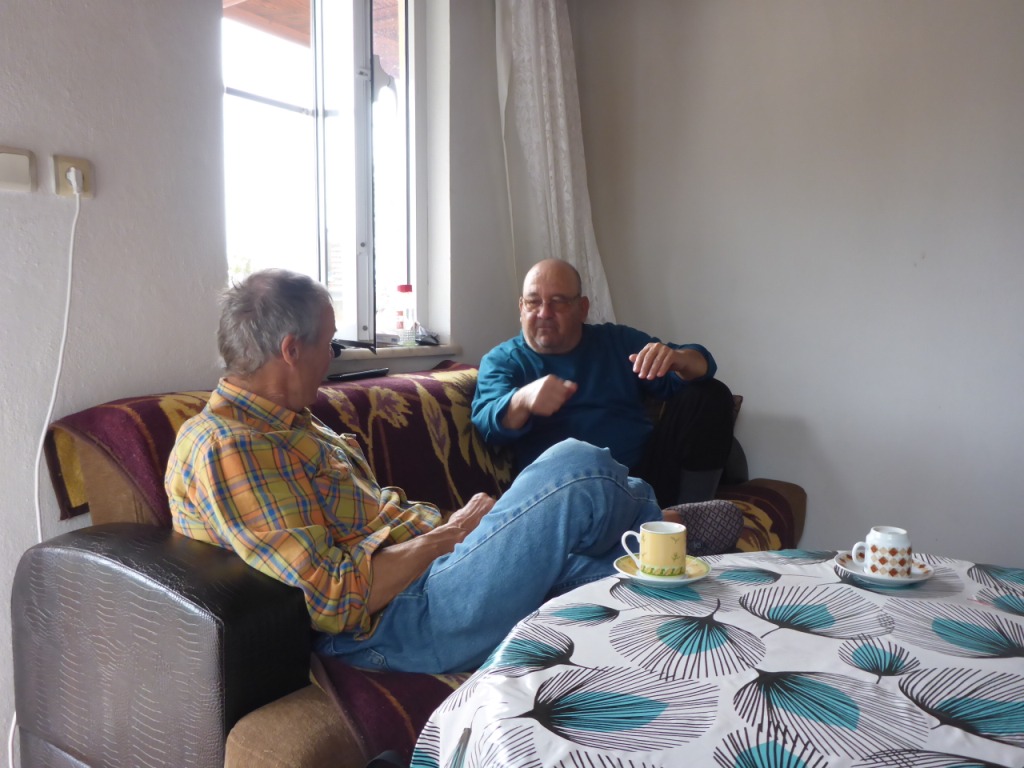
Le monsieur nous offre un thé et nous parle de ses abeilles
The man offers us tea and talks about his bees


Une ruche
A bee hive


Le raccourci
The shortcut


Le raccourci
The shortcut


Là ça va mieux
Here, it's better


Mosquée dans le  village en redescendant
Mosque in the village after the shortcut


Travaux à Ekincik
Road work in Ekincik


Maisons non finies et abandonnées
Non finished and abandonned houses


15.03.2016


Molène
Mullein
Kongslys
Verbascum
15.03.2016


15.03.2016


Tuesday, 15 March 2016

14.03.2016 Ekincik

Lundi 14 mars 2016

Encore une nuit mouvementée. Nous nous couchons mais on entend que le vent force, du sud. On est juste derrière la jetée, protégé, mais les deux corps morts qui nous tiennent ne nous éloignent pas assez du bateau voisin (un bateau de tourisme, notre voisin-pêcheur est sorti pêcher). Jens a renforcé les amarres devant, au quai mais Maja tire dure et vient se coller au voisin. A 1 h 30, le pêcheur revient. Il tape sur la coque et nous dit de lui donner une corde, il va l’amarrer à la jetée. Jens avait eu la même idée et allait le faire, mais avec l’aide du pêcheur il n’a pas besoin d’aller à terre. Un autre homme, venu en voiture vérifier son bateau, aide aussi. Et en fait, ils mettent deux cordes à la jetée. Maintenant Maja est super bien amarrée. Tout cela au milieu de fortes rafales de vent, d’éclairs et de coups de tonnerre. Et quand ils ont fini, il se met à pleuvoir des trombes. Nous nous rendormons vers 3 h du matin. C’est vraiment sympa de nous aider comme cela en pleine nuit. Je dis à Jens qu’on va inviter notre voisin-pêcheur à diner. Ce matin, c’est plus calme, mais il pleut. Notre voisin-pêcheur est déjà reparti en mer. Il fait 13 et un peu de chauffage est le bienvenu. Nous allons faire un petit tour en vélo et quelques courses. Le village est tout petit, 200-300 d’habitants, mais il y a deux boutiques. Une un peu moins petite mais qui ne vend pas d’alcool et l’autre, qui a un drôle de nom (voir photo) est tout petite mais vend de l’alcool. On a de la chance, pendant notre demi-heure de promenade en vélo, il ne pleut pas, mais dès qu’on rentre, il se remet à pleuvoir et il va pleuvoir toute la journée. Donc, bricolage pour Jens, blog et tricot pour moi. J’ai le temps de faire quelque chose que je voulais faire depuis longtemps : mettre la distance parcourue chaque jour, depuis Finike. Je le fais aujourd’hui et je peux vous dire qu’on a déjà fait 120 miles nautiques (MN) sur le chemin du retour. Jens range les vélos à l’abri dans une buvette fermée. Je mets un poulet au four, malheureusement un poulet de « fabrique » pas très bon, alors qu’on voit des poulets heureux partout ici. Bülent, notre voisin-pêcheur sympa, vient diner et apporte une salade de calamar, crevettes, pommes de terre, anneth, ail, huile d’olive et citron, excellente. Il va pêcher sans carte, sans GPS, son bateau n’a pas de compteur, il ne sait pas combien de litres de diésel son réservoir contient mais il est certainement un très bon marin. Il vit sur son bateau, dort et cuisine sur 2 m carré, son bateau fait 7 m et il va toujours seul. Il a appris l’anglais tout seul, avec la télé et un dictionnaire. Bonhomme intéressant. Il nous raconte que la municipalité a fait construire la jetée et aménager le quai avec corps morts, prises de courant et d’eau pour les touristes. Eux ont le droit de s’y mettre en hiver, mais l’été ils doivent aller se mettre à un vieux quai de bois. Ils ne sont que trois pêcheurs au village, tous les autres bateaux sont pour promener les touristes. Très bonne soirée ensemble.
    
March 14, 2016

Another eventful night. We go to bed but we hear strong wind gusts from the south. We are just behind the pier, protected, but the two moorings that hold us don’t prevent us to touch our neighboring boat (a tourist boat, our neighbor fisherman went out fishing). Jens strengthen the lines between us and the dock but Maja is pulling hard and just comes too close to the neighbor. At 1:30 am, the fisherman returns. He calls us and tells us to give him a rope, he will tie at the jetty. Jens had the same idea and was going to do it, but with the help of the fisherman he doesn’t need to go ashore. Another man who came by car to check his boat, also helps. And in fact, they put two lines to the jetty. Now Maja is very well moored. All this amid strong winds, lightning and thunder. And when they are finished, it starts to rain very hard. We fall asleep again at 3 am. It was really nice to help us in the middle of the night. I say to Jens we will invite our neighbor fisherman to dinner. This morning, it's quieter, but it’s  raining. Our neighbor fisherman has already left at sea. It is 
13 and some heating is welcome. We make a small bike tour and some shopping. The village is very small, 200-300 people, but there are two shops. A slightly less small one that does not sell alcohol and another that has a funny name (see photo), is very small and sells alcohol. We are lucky, during our half an hour bike ride, it does not rain, but once we get home, it starts raining again and it will rain all day. So DIY for Jens, blog and knitting for me. I have time to do something I wanted to do for a long time: to put the distance traveled each day, starting in Finike. I can do it today and I can tell you we have already done 120 nautical miles (NM) on our way back. Jens stores the bikes away in a closed refreshment bar. I put a chicken in the oven, unfortunately an industrial chicken, not very good; too bad, there are happy chickens everywhere here. Bülent, our friendly neighbor-fisherman, comes to dinner and brings a squid salad, with shrimp, potatoes, dill, garlic, olive oil and lemon, excellent. He goes fishing without a map, without GPS, the boat doesn’t have a log, it does not know how many liters of diesel his tank contains but he is certainly a very good sailor. He lives on his boat, sleeping and cooking on 2 square meters, his boat is 7 m long and he is always alone. He learned English on his own, with TV and a dictionary. Interesting man. He tells us that the municipality has built the pier and developed the dock with moorings, sockets for water and electricity, for tourists. The people living here have the right to use the pier in winter, but in summer they must move out at an old wooden wharf. They are just three fishermen in the village, all the other boats are tourists boats. We spent a good evening together.


1 h 30 du matin, le pêcheur nous amarre mieux à la jetée
(Jens en pyjama)
1:30 am, the fisherman moors us to the jetty


Et encore une corde
And another line


Un dessin avant-après
A drawing before-after


Maja avec ses deux amarres à la jetée
Maja with her two lines to the jetty


C'est bien gris
It's all grey


Le bateau de notre voisin-pêcheur
Our neigbor-fisherman's boat


Tour en vélo
Bike ride


Lupins sauvages
Wild lupins


Village


Confused grocery?


On n'a pas vu la mosquée, mais des hauts-parleurs diffusent l'appel à la prière
We have not seen the mosque, but speakers broadcast the call to prayer


Cirés et bottes
Oilskins and rubber boots


Il pleut
It's raining


Les vélos sont à l'abri
The bikes are sheltered


Tablette et tricot
Tablet and knitting


Salade de calamar et crevettes de Bülent
Calamar and shrimp salad made by Bülent


Bülent


Ekincik, 14.03.2016


La même, détail
The same one, detail


Monday, 14 March 2016

13.03.2016 Port d'Ekincik/Ekincik harbor

Dimanche 13 mars 2016

Un peu plus de vagues ce matin, Maja bouge un peu plus. J’ai oublié de dire que depuis quelques jours Jens nous fait une bonne salade de fruits au petit-déjeuner. Le plan, ce matin, est d’aller en vélo au village acheter du miel et de l’huile d’olive à Hakif. Nous mettons les vélos à terre et découvrons que le mien est crevé à l’arrière. Jens a donc l’idée d’aller au village en bateau. My Marina, c’est bien, mais on est vraiment isolé. Nous rechargeons les vélos sur Maja et partons. La traversée est d’un MN, à peine. Nous entrons dans le petit port, jetons l’ancre à l’arrière et nous mettons le nez sur le quai où nous voyons une place, assez à l’extérieur du port. Mais l’ancre ne tient pas, donc nous laissons Maja pivoter et la mettons le long du quai. On demande à deux hommes assis sur un banc si on peut rester là une heure. OK. Mais un pêcheur vient parler à Jens et l’emmène pour lui monter une bien meilleure place, tout à l’intérieur du port, près de la jetée, et en plus à cette place il y a un corps mort. Nous déménageons donc, le pêcheur nous aide à accoster et nous sommes bien mieux. Nous invitons le pêcheur à boire un thé, il parle un peu anglais. Puis, Akif arrive et nous emmène en voiture, d’abord il nous montre la maison qu’il se fait construire sur un grand terrain, avec jardin et poules. Nous rencontrons là sa femme, Raziye. Il nous ramène tous chez lui, il a en fait un petit hôtel, une « pansiyon". Sa femme et lui nous offrent un café et la vieille grand-mère (95 ans) regarde dans mon marc de café et me prédit une rentrée d’argent. Très bien Nous achetons du miel et de l’huile d’olive et ils nous donnent en plus des œufs, des olives, de la salade, du persil et de l’anneth (dill). Merci à eux de leur gentillesse. Nous rentrons à pied, mangeons le lunch, restons un peu au bateau puis allons à la plage. Elle est longue, 1,5 km, au sable gris et un gros rouleau s’est formé à cause du vent. Mais tout au bout, c’est plus calme et nous nous baignons rapidement. Retour sur Maja, Jens l’amarre bien avec deux corps morts, il y a parfois des rafales assez fortes. Nous restons ici ce soir. Dans la soirée, notre voisin le pêcheur sort pêcher. 
     
Sunday, March 13, 2016

A little more waves this morning, Maja moves a little more. I forgot to say that a few days ago Jens has started to make a good fruit salad for breakfast. The plan this morning is to go by bike to the village to buy honey and olive oil at Akif’s place. We put the bikes on land and discover that mine is flat at the back. Jens gets the idea of ​​going to the village by boat. My Marina is fine, but it is isolated. We put our bikes back on the boat and go on Maja. The crossing is one NM, barely. We enter the small harbor, put the anchor at the back and we put the bow on the dock where we see a place, quite out of the harbor. But the anchor doesn’t hold, so we leave Maja rotate and put her along the dock. We ask two men sitting on a bench if we can stay here for an hour. OK. But a fisherman comes to talk to Jens and shows him a much better place, more inside the harbor, near the pier, and where there are moorings lines. We move to the new place and the fisherman helps us to dock. We invite the fisherman to drink tea, he speaks some English. Then Akif arrives and takes us by car, first to show us the house he is building on a large plot with garden and chickens. We meet there his wife, Raziye. He brings us all home, he owns in fact a small hotel, a "pansiyon." He and his wife offer us coffee and the old grandmother (95 years) looks in my coffee grounds and sees that I am to receive money soon. Good. We buy honey and olive oil and they give us more, eggs, olives, salad, parsley and dill. Thanks to them for their kindness. We walk home, eat lunch, stay a little on the boat and go to the beach. It is long a long beach, 1.5 km long with gray sand and today a big breaking wave because of the wind. But at the end, it,s calmer and we can swim there. Back on Maja, Jens secures Maja with two mooring lines, there is sometimes quite strong gusts. We stay here tonight. In the evening, our neighbor the fisherman goes out fishing.


Nos salades de fruits
Our fruit salad


Bye, bye My Marina


Nous traversons la baie d'est en ouest (un mile nautique)
We motor across the bay, from east to west (one nautical mile)


Le village au fond de la baie
The village, at the bottom of the bay


Le petit port
The small harbor


Maja, bien à l'intérieur du port
Maja, well inside the harbor


Le pêcheur qui nous aidés
The fisherman who helped us


La maison en construction de Akif, sa femme dans le jardin
Akif's house under construction, his wife in the garden


Leur "pansiyon" (petit hôtel)
Their "pansiyon" (a small hotel)


Jens, Hakif


La vieille dame me prédit une rentrée d'argent
The old lady predicts me more income


La plage
The beach


Au bout, c'est plus calme
At the end, it's quieter


Sur la plage: comment ces plantes arrivent-elles à pousser là?
On the beach: how these plants manage to grow there?


Teanant une lampe entre ses dents, Jens fait une petite soudure
Holding a torch between his teeth, Jens is soldering


Plage d'Ekincik, 13.03.2016
Ekincik beach, 13.03.2016