Monday, 14 March 2016

13.03.2016 Port d'Ekincik/Ekincik harbor

Dimanche 13 mars 2016

Un peu plus de vagues ce matin, Maja bouge un peu plus. J’ai oublié de dire que depuis quelques jours Jens nous fait une bonne salade de fruits au petit-déjeuner. Le plan, ce matin, est d’aller en vélo au village acheter du miel et de l’huile d’olive à Hakif. Nous mettons les vélos à terre et découvrons que le mien est crevé à l’arrière. Jens a donc l’idée d’aller au village en bateau. My Marina, c’est bien, mais on est vraiment isolé. Nous rechargeons les vélos sur Maja et partons. La traversée est d’un MN, à peine. Nous entrons dans le petit port, jetons l’ancre à l’arrière et nous mettons le nez sur le quai où nous voyons une place, assez à l’extérieur du port. Mais l’ancre ne tient pas, donc nous laissons Maja pivoter et la mettons le long du quai. On demande à deux hommes assis sur un banc si on peut rester là une heure. OK. Mais un pêcheur vient parler à Jens et l’emmène pour lui monter une bien meilleure place, tout à l’intérieur du port, près de la jetée, et en plus à cette place il y a un corps mort. Nous déménageons donc, le pêcheur nous aide à accoster et nous sommes bien mieux. Nous invitons le pêcheur à boire un thé, il parle un peu anglais. Puis, Akif arrive et nous emmène en voiture, d’abord il nous montre la maison qu’il se fait construire sur un grand terrain, avec jardin et poules. Nous rencontrons là sa femme, Raziye. Il nous ramène tous chez lui, il a en fait un petit hôtel, une « pansiyon". Sa femme et lui nous offrent un café et la vieille grand-mère (95 ans) regarde dans mon marc de café et me prédit une rentrée d’argent. Très bien Nous achetons du miel et de l’huile d’olive et ils nous donnent en plus des œufs, des olives, de la salade, du persil et de l’anneth (dill). Merci à eux de leur gentillesse. Nous rentrons à pied, mangeons le lunch, restons un peu au bateau puis allons à la plage. Elle est longue, 1,5 km, au sable gris et un gros rouleau s’est formé à cause du vent. Mais tout au bout, c’est plus calme et nous nous baignons rapidement. Retour sur Maja, Jens l’amarre bien avec deux corps morts, il y a parfois des rafales assez fortes. Nous restons ici ce soir. Dans la soirée, notre voisin le pêcheur sort pêcher. 
     
Sunday, March 13, 2016

A little more waves this morning, Maja moves a little more. I forgot to say that a few days ago Jens has started to make a good fruit salad for breakfast. The plan this morning is to go by bike to the village to buy honey and olive oil at Akif’s place. We put the bikes on land and discover that mine is flat at the back. Jens gets the idea of ​​going to the village by boat. My Marina is fine, but it is isolated. We put our bikes back on the boat and go on Maja. The crossing is one NM, barely. We enter the small harbor, put the anchor at the back and we put the bow on the dock where we see a place, quite out of the harbor. But the anchor doesn’t hold, so we leave Maja rotate and put her along the dock. We ask two men sitting on a bench if we can stay here for an hour. OK. But a fisherman comes to talk to Jens and shows him a much better place, more inside the harbor, near the pier, and where there are moorings lines. We move to the new place and the fisherman helps us to dock. We invite the fisherman to drink tea, he speaks some English. Then Akif arrives and takes us by car, first to show us the house he is building on a large plot with garden and chickens. We meet there his wife, Raziye. He brings us all home, he owns in fact a small hotel, a "pansiyon." He and his wife offer us coffee and the old grandmother (95 years) looks in my coffee grounds and sees that I am to receive money soon. Good. We buy honey and olive oil and they give us more, eggs, olives, salad, parsley and dill. Thanks to them for their kindness. We walk home, eat lunch, stay a little on the boat and go to the beach. It is long a long beach, 1.5 km long with gray sand and today a big breaking wave because of the wind. But at the end, it,s calmer and we can swim there. Back on Maja, Jens secures Maja with two mooring lines, there is sometimes quite strong gusts. We stay here tonight. In the evening, our neighbor the fisherman goes out fishing.


Nos salades de fruits
Our fruit salad


Bye, bye My Marina


Nous traversons la baie d'est en ouest (un mile nautique)
We motor across the bay, from east to west (one nautical mile)


Le village au fond de la baie
The village, at the bottom of the bay


Le petit port
The small harbor


Maja, bien à l'intérieur du port
Maja, well inside the harbor


Le pêcheur qui nous aidés
The fisherman who helped us


La maison en construction de Akif, sa femme dans le jardin
Akif's house under construction, his wife in the garden


Leur "pansiyon" (petit hôtel)
Their "pansiyon" (a small hotel)
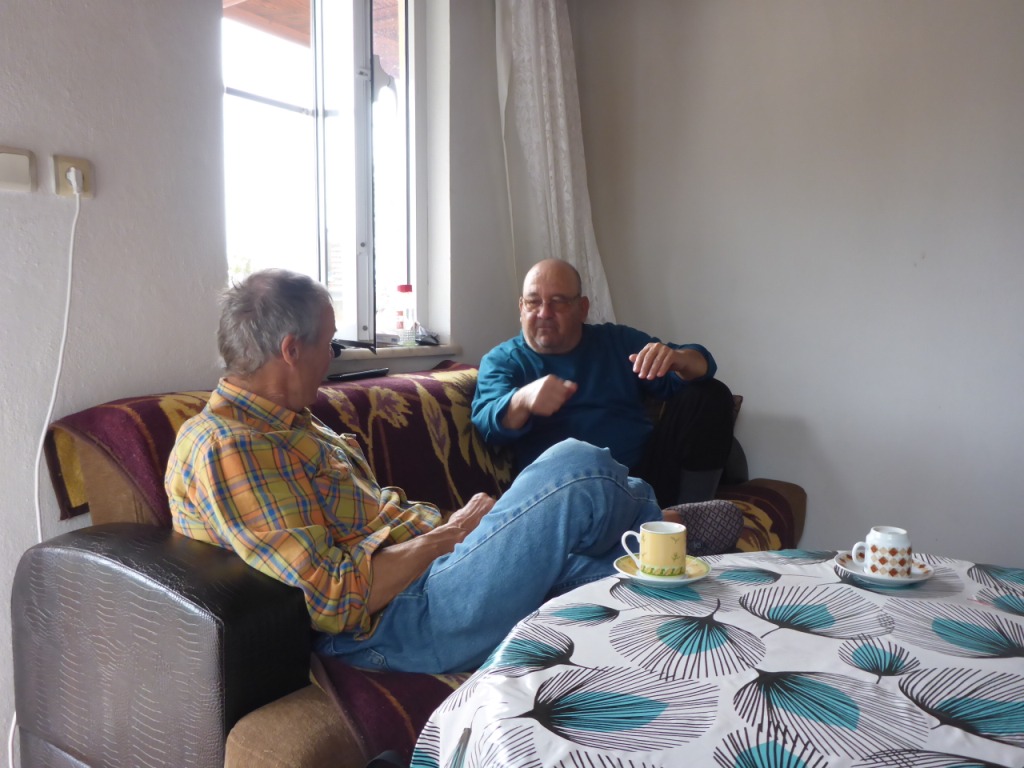

Jens, Hakif


La vieille dame me prédit une rentrée d'argent
The old lady predicts me more income


La plage
The beach


Au bout, c'est plus calme
At the end, it's quieter


Sur la plage: comment ces plantes arrivent-elles à pousser là?
On the beach: how these plants manage to grow there?


Teanant une lampe entre ses dents, Jens fait une petite soudure
Holding a torch between his teeth, Jens is soldering


Plage d'Ekincik, 13.03.2016
Ekincik beach, 13.03.2016


Sunday, 13 March 2016

12.03.2016 Ekincik

Samedi 12 mars 2016

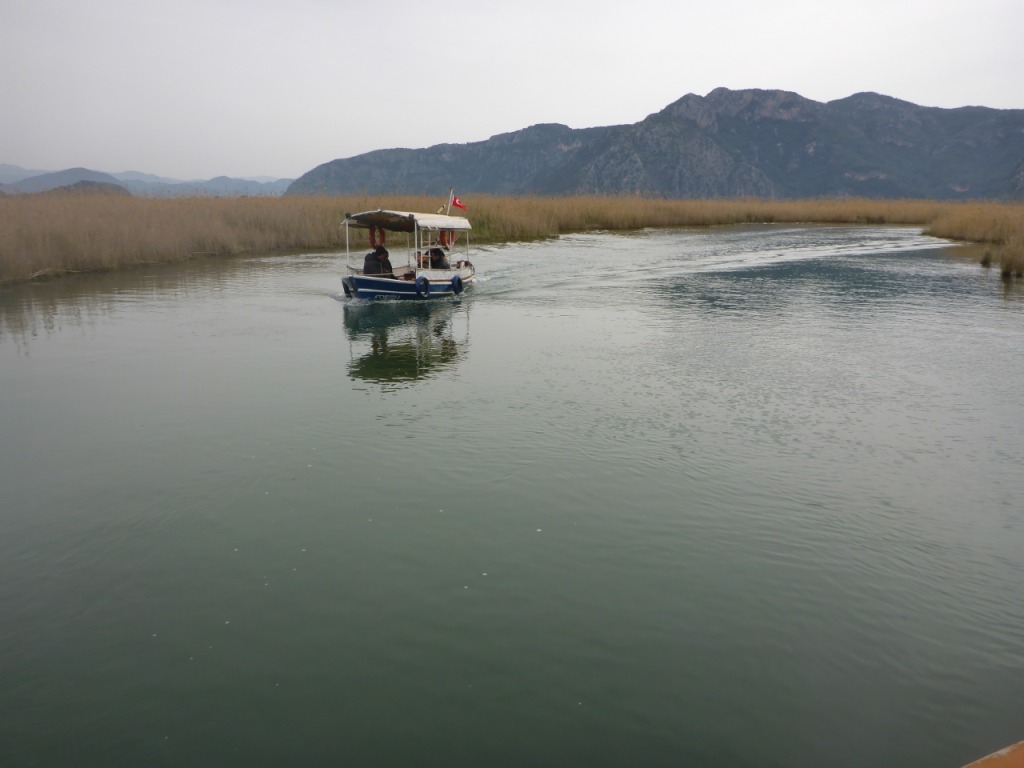
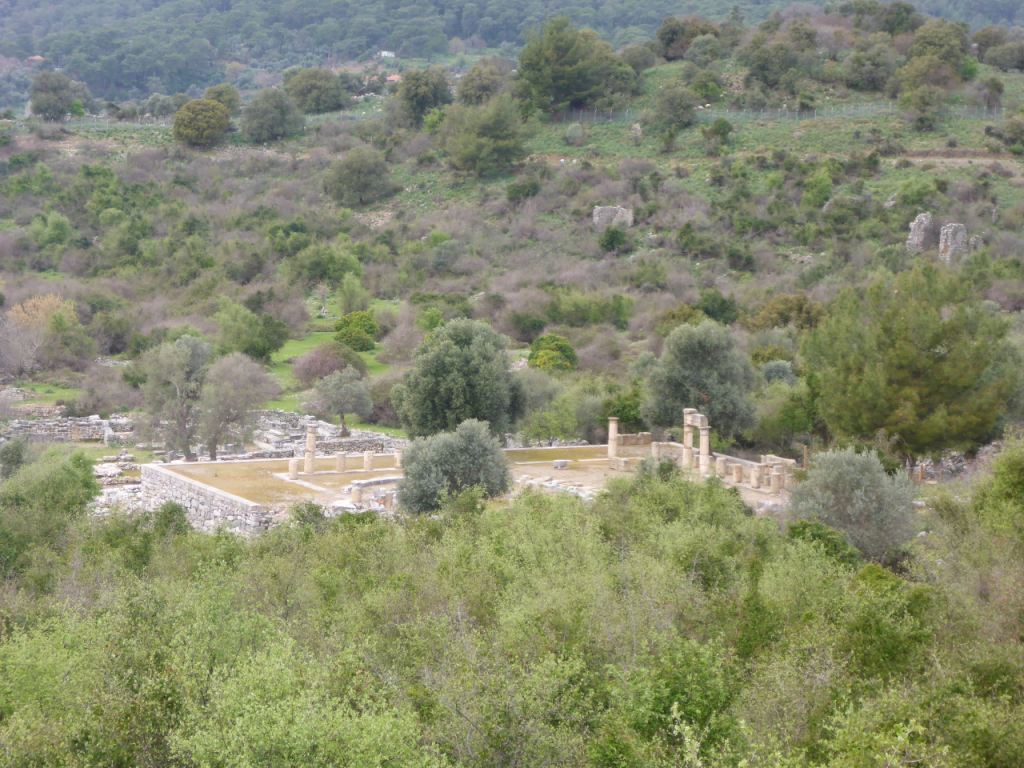
Le capitaine du “Sultanpalas” vient nous chercher à 9 h. Son bateau peut emmener 18 personnes mais nous ne sommes que nous deux. Comme nous sommes au fond de la baie, il nous faut ressortir en mer, contourner un cap, rentrer dans la rivière et la remonter (voir carte). C’est assez long et nous avons le temps d’avoir bien froid. Il fait gris et pas chaud. Tout autour,ici, c’est montagneux, mais quand nous arrivons à la rivière, c’est un autre monde. C’est un large estuaire, tout plat et où il ne pousse que des roseaux. Pour rentrer dans la rivière il faut passer une barre, un haut fond qui ferme presque complètement l’entrée. Et bien que Sultanpalas n’ait que 80 cm de tirant d’eau (de profondeur) nous touchons. Mais comme c’est du sable, ce n’est pas grave et en accélérant un peu on passe. La rivière est divisée en de nombreux bras et il faut connaitre pour choisir le bon. A 10 h 30, Akif (notre capitaine) nous débarque à un ponton sur la rive ouest de la rivière et reste au bateau pendant que nous allons voir les ruines de Caunos. Nous marchons à peu près 1 km et y arrivons. Le site a été occupé depuis l’antiquité mais ce sont les Romains qui développèrent la ville, avec bains, cirque, temple et port. Puis le port s’est ensablé et la population a été victime de malaria. Vers 1500, la ville est abandonnée. Nous regardons les ruines puis montons au château-fort perché sur une colline, de là-haut nous avons une belle vue vers la mer, l’estuaire, la ville proche de Dalyan et les ruines. Nous retournons au bateau à midi et demi et remontons un peu plus la rivière vers Dalyan. Nous passons près de tombes creusées dans la falaise. Quel mystère. Pourquoi allaient-ils enterrer leurs morts si haut dans une falaise ? La ville de Dalyan nous ramène à notre époque. Ici, le tourisme est big business, plus de trois cents bateaux promènent les touristes sur la rivière et les restaurants se comptent par dizaines. Nous allons déjeuner ensemble, Akif et nous, puis acheter des fruits au marché et commençons notre retour en bateau. Et là, nous touchons la barre encore plus, nous restons coincés sur un banc de sable. Mais en avançant et reculant Akif arrive à nous libérer, mais il faut essayer à une autre place. Heureusement qu’on n’est pas venu ici avec Maja. Nous arrivons à My Marina à 15 h, très fatigués. Akif a du miel et de l’huile d’olive à vendre, nous verrons cela demain. Repos, petite promenade, Jens insiste que cela va nous réchaufer, moi je ne suis pas si convaincue, blog et diner de thé et biscottes. 

Saturday, March 12, 2016

The captain of the "Sultanpalas" picks us up at 9 am. His boat can take 18 people but we are only the two of us. As we are at the bottom of the bay, we must go out at sea, around a cape, enter into the river and go up river (see map). It's quite long and we have time to be very cold. It is gray and cool today. All around, here, it’s mountainous, but when we get to the river, it's another world. It is a broad estuary, all flat and where only reeds grow. To go into the river one must pass a bar, a shoal which almost completely closes the entrance. And although Sultanpalas has only 80 cm draft we touch. But as it is sand, it's not so serious and by accelerating a little we manage to pass. The river is divided into many arms and one must know the place to pick up the right one. At 10:30 am, Akif (our captain) leaves us at a ponton on the west bank of the river and stays on the boat while we’ll see Caunos ruins. We walk about 1 km and get there. The site has been occupied since ancient times but it was the Romans who developed the city with baths, circus, temple and harbor. Then the harbor silted up and the population was victim of malaria. By 1500, the city was abandoned. We look at the ruins and then climb to the castle perched on a hill, from the top we have a beautiful view towards the sea, the estuary, the city deDalyan and the  ruins. We return to the boat at twelve thirty and go a little more up river towards the city of Dalyan. We pass by ancient tombs carved into the cliff. What a mystery. Why did they bury their dead so high in a cliff? Dalyan takes us back to our time, here  tourism is big business, over three hundred boats take the tourists on the river and restaurants are by the dozens. We have lunch together, Hakif and us then buy fruit at the market and start our return by boat. And here we touch the bar even more, we are stuck on a sandbar. By going forth and back Akif takes us free, but we have to try at another place. We are very happy that we didn’t take Maja here. We arrive at My Marina at 3 pm, very tired. Akif has honey and olive oil for sale, we’ll see that tomorrow. Rest and a short walk, Jens is sure it will warm us up, I'm not so convinced, then blog and dinner tonight is tea and crackers.


Avec le "Sultanpalas", nous allons de My Marina (dans la baie en haut à gauche)
en mer, entre le cap et l'ile et remontons la rivière
With "Sultanpalas", we go from My Marina (in the bay up left)
out at sea, between the cape and the island and up river


Voici le Sultanpalas qui vient nous chercher
Here comes Sultanpalas to pick us up


Les deux capitaines
The two captains


Une grotte-tunnel, on voit de l'autre côté
A cave-tunnel, we can see through it


La mer est calme
Quiet sea


On rentre dans la rivière
We enter the river


Roseaux
Reeds


Rencontre 
Encounter


Un piège à poissons avec juste une ouverture pour les bateaux
A fish trap with an opening for the boats


Nombreux bateaux de tourisme
Many boats for tourism


Ruines de Caunos
Caunos ruins


Caunos


Caunos


Caunos


Caunos


Une tortue, en montant au chateau-fort
A turtle, going up to the fort


La rivière et Dalyan
The river and Dalyan


Vallée fertile
Fertile valley


L'estuaire et la mer
The estuary and the sea


Petit bassin où vivent de nombreuses grenouilles
(qui sont très bruyantes)
Small basin where many frogs live
(and they are noisy)


Les tombes dans la falaise
The tombs in the cliff


Dalyan


Akif, Jeannette, Jens


De retout à My marina
Back to My Marina


Caunos, 12.03.2016


Saturday, 12 March 2016

11.03.2016 Baie d’Ekincik/Ekincik bay

Vendredi 11 mars 2016

Une remarque avant de partir de la crique Kapi : en feuilletant le guide aujourd’hui, je reconnais une photo à la page 3, dans l’intoduction. L’auteur présente la façon de s’amarrer en Méditerranée, proue ou poupe au quai, et la photo est prise à Kapi, mais il ne met pas le nom ! Le nom du restaurant (Göbün), les fauteuils en rotin, le lampadaire en bois, tout y est. Coïncidence.
Belle matinée, fraiche, 10 quand on se lève. Mais quand le soleil apparait, la température monte rapidement à 20. Nous partons à 9 h 20, pas de vent, mer très calme, donc au moteur. Nous longeons la côte vers l’ouest vers Marmaris, avec un arrêt prévu en route. Nous croisons un voilier turc, peut-être va-t-il à Kapi, le propriétaire du restaurant nous a dit qu’aux week-ends, il a des visiteurs. Nous croisons aussi, et cela c’est moins drôle, un grand morceau de plastique qui flotte. Nous passons le cap Dişibilmez et rentrons dans le baie de Ekincik, une grande baie ouverte vers le sud et où le guide présente une marina qui s’appelle « My Marina », organisée par le propriétaire d’un restaurant. Mais c’est d’un autre standing que les pontons bricolés maison que l’on a vus parfois. Ici ce ne sont pas des pontons, mais des quais en dur, entourés tout autour d’une grosse corde qui sert de fender, avec bornes d’eau et d’électricité de première classe. Nous reconnaissons bien la photo, la seule différence, c’est que la marina est pleine sur le guide et complètement vide devant nos yeux, pas un seul bateau. On se met d’abord à l’extérieur du quai mais nous serons encore plus protégés à l’intérieur, donc on démenage. J’ai fait une photo du comité d’accueil … Nous allons à terre et un homme nous dit « Welcome to My Marina », on peut rester sans problème, gratuitement, mais sans service d’eau et d’électricité. Très bien pour nous, on n’en a pas besoin. Il est 14 h 40. Nous mettons les vélos à terre, le village au fond de la baie est à 3,5 km. Le grand portail d’accès à la marina est fermé mais une petite porte peut s’ouvrir de 40 cm, cela va juste pour passer les vélos. La baie se termine au fond par une jolie plage, un village et un petit port. Nous faisons quelques courses à l’épicerie et l’épicier nous annonce que nous sommes les premiers touristes de l’année 2016. En repartant, un monsieur en voiture nous interpelle. Il nous propose de nous emmener demain, en bateau, par la rivière, aux ruines de Caunos (ou Kaunos), un grand port antique qui, à cause des alluvions apportées par la rivière est maintenant à 8 km à l’intérieur des terres. Donc demain nous allons en « båttur» mais pas avec Maja.

Distance Kapi-My Marina (Ekincik): 28 MN/NM

Friday, March 11, 2016

One note before leaving Kapi Creek: flipping through the guide today, I recognize a photo on page 3, in the intoduction. The author shows how to dock in the Mediterranean, bow or stern to the dock, and the picture is taken here, in Kapi, but he doesn’t name the place! The name of the restaurant (Göbün), rattan chairs, the wooden lamp, everything is there. Coincidence.
Beautiful fresh morning, 10 when we get up. But when the sun appears, the temperature rapidly rises to 20. We leave at 9:20 am, no wind, very calm, so we are motoring. We follow the coast to the west towards Marmaris, with a scheduled stop en route. We mett a Turkish yacht, maybe he is going to Kapi, the restaurant owner told us that at weekends, he gets visitors. We meet too, and it is less funny, a large piece of plastic, floating. We pass Dişibilmez cape and trun into Ekincik bay, a large  bay open to the south and that the guide presents a marina called "My Marina", organized by the owner of a restaurant. But it is another standard than the makeshift pontoons  that we have seen sometimes. Here it is not a pontoon, but the real hard docks surrounded all around by a thick rope that serves as fenders, first class terminals with water and electricity. We recognize well the photo, the only difference is that the marina is full on the guide and completely empty before our eyes, not a single boat. First we dock on the outside of the dock but we will be more protected inside, so we move. I made a picture of the welcome committee ... We are going on land and a man says, "Welcome to My Marina", we can stay without problems, free of charge, but without water and electricity. Very well for us, we don’t need that. It is 2:40 pm. We put the bikes on land, the village at the bottom of the bay is at 3.5 km. The large gate to the marina is closed but a small door can open 40 cm, just enough to pass the bikes. The bay ends at the bottom with a nice beach, a village and a small harbour. We do some shopping at the grocery store and the grocer tells us that we are the first tourists of the year 2016. Coming home, a man driving a car calls us. He offers to take us tomorrow, by boat on the river, to the ruins of Caunos (or Kaunos), a large ancient harbour which, because of the alluvial deposits brought by the river, is now 8 km inland. So tomorrow we w'll go on a "båttur" but not with Maja.


Cette photo du guide prise à Kapi
This picture in the guide is taken in Kapi


Bye, bye Kapi


Je nettoie les semelles boueuses de mes chaussures avec un couteau
I am cleaning my shoes muddy soles with a knife


Mer bleue et montagnes enneigées
Blue sea and snowy mountains


Un voilier!
A yacht!


Nous passons le cap Disibilmez
We pass Cape Disibilmez


My Marina, photo dans le guide
My Marina, picture in the guide


My Marina


Maja, My Marina


Le comité d'accueil
Welcome committee


Maja


C'est juste pour passer les vélos
A little bit difficult to pass the bikes


Le portail
The gate


Des ruches
Beehives


My Marina dans le creux là-bas
My Marina, in the corner overthere


Le petit port est déjà à l'ombre
The small harbour is already in the shadow


La plage aussi
The beach too


Nouveau pavement dans la grand-rue
New pavement on main street


Jens vérifie la pompe qui vide le bateau
Jens is checking the pomp which empties the boat


My Marina, 11.03.2016