Saturday, 14 February 2015

13.02.2015 La Duquesa

Vendredi 13 Février 2015

Il fait encore nuit à 7 h 45 quand nous partons de Barbate, mais de nombreux petits bateaux de pêche sortent déjà. En sortant du port, un épais brouillard nous attend. Jens met le radar et on se sent plus en sécurité. On « voit » les autres bateaux, même les plus petits, et il y en a pas mal. Quand le soleil se lève, à 8 h 30, le brouillard se dissipe vite. La mer est très calme et il n’y a pas de vent. La côte est jolie, vallonnée, verte et même boisée. Je vois au loin une « ile », mais il n’y a pas d’ile sur la carte, c’est en fait un porte-containeurs immense ! Nous allons vers le sud-est et nous rapprochons de la pointe sud de l’Espagne, Tarifa, qui est célèbre pour ses plages ventées, délices des wind-surfeurs. Il souffle un très fort vent 300 jours par an ici. Mais quand nous nous passons, il n’y a pas un souffle et la mer est calme, c’est bien pour nous mais j’imagine que les surfeurs peuvent faire la grasse mâtinée aujourd’hui. Nous avançons bien, aidé par le courant. Nous nous faisons la bise : nous sommes maintenant en Méditerranée ! Hourra ! Nous continuons et remontons vers le nord-est, nous pensons nous arrêter à Gibraltar. La baie d’Algeciras (pour les espagnols) ou la baie de Gibraltar (pour les Anglais) est une grande baie bien ronde, ouverte vers le sud et le « Rock » en est la pointe sud-est. Et là, nous croyons arriver au moins à New-York. Le traffic de navires en tout genre, de ferries, de bateaux de croisière, de bateaux ravitailleurs de diésel et de bateaux de pêche est incroyable. Il nous faut faire du slalom entre tout cela. Je compte 25 grands navires autour de nous et nous passons tout près du « Risanger » de Bergen.  Nous nous approchons de Gibraltar, je hisse le pavillon de courtoisie anglais et Jens téléphone à la première marina. Réponse inattendue : ils n’ont pas de place « pour un yacht de cette taille ! ». Nous essayons la deuxième marina, même réponse ! En Février ? Déçus et pas contents du tout, nous décidons de continuer. Je redescends vite fait mon drapeau de courtoisie anglais et remonte l’Espagnol. Heureusement, il fait beau et il est encore assez tôt. Nous prenons un ankerdram anticipé pour nous remonter le moral et, ensuite, la Méditerranée nous accueille comme des rois : soleil, chaud (20 ⁰), le vent se lève de l’ouest, la mer est bleue, pas de vagues. Nous hissons les voiles et avons deux heures de pur bonheur. C’est pendant ce temps que je fais le blog d’hier. Nous allons jusqu’à La Duquesa, une marina dans une ville de vacances où nous arrivons à 17 h 30. Là, nous faisons connaissance avec la manière méditerranéene de s’amarrer. Finis les pontons flottants. Comme il n’y a pas de marée ici, les bateaux s’amarrent directement à un ponton fixe en béton.  Je vous mettrai des photos demain pour vous montrer. Petit tour à terre, la ville est animée, beaucoup de retraités (comme nous), il fait beau et doux. Nous allons manger un couscous (très moyen) à un restaurant marocain qui s’appelle, bien sûr, Casablanca. Nous discutons un peu avec nos voisins de table, un Ecossais et une Irlandaise, qui voyagent, eux, en camping-car. Une très bonne première journée en Méditerranée.

Friday, February 13, 2015

It was still dark at 7:45 am when we leave Barbate, but many small fishing boats are out already. Leaving the harbor, a thick fog is waiting us.  Jens puts the radar on and it feels safer. We can "sees" the other boats, even the small ones, and there are quite a few. When the sun rises at 8:30 am, the fog dissipates quickly. The sea is very calm and there is no wind. The coast is pretty, hilly, green and even woody. I see in the distance an "island", but there is no island on the map, it's actually a huge containers-ship! We go to the southeast, and get closer to the southern tip of Spain, Tarifa, which is famous for its windy beaches, wind-surfers delight. It blows a strong wind here 300 days a year. But when we pass, there is no wind and the sea is calm, it's good for us but I imagine that the surfers can stay in bed longer today. We are doing well, helped by the current. We kiss each other to celebrate: we are now in the Mediterranean! Hooray! We continue northeast, we would like to stop in Gibraltar. La Bahia de Algeciras (in Spanish) or the Bay of Gibraltar (in English) is a large round bay open to the south and the "Rock" is the southeastern tip. And when we arrive there, we could believe we were in New York. The traffic of ships of all kinds, ferries, cruise ships, tanker ships and fishing boats is incredible. We have to slalom between all that. I can see 25 large ships around us and we pass near the "Risanger" from Bergen. We are approaching Gibraltar, I hoist the English courtesy flag and Jens phones the first marina. Unexpected answer: they do not have a berth "for a yacht of this size! ". We try the second marina, same answer! In February? Disappointed and not very happy at all, we decide to continue. I take down quickly the English courtesy flag and hoist again the Spanish one.Fortunately, the weather is nice and it's still early. We take an early ankerdram to cheer us up and then the Mediterranean welcomes us like kings: sun, warm (20 ⁰), the wind starts to blow from the west, the sea is blue, no waves. We set sail and have two hours of pure happiness. It is during this time that I do the yesterday blog. We are going to La Duquesa marina in a holiday town where we arrive at 5:30 pm. There, we try the mediterranean way to moor. No more floating pontoons, as there is no tide here the boats dock directly to a fixed concrete pontoon. I will put pictures to show you tomorrow. Small walk on land, the city is lively, many retirees (like us) are living here and it's still sunny and warm. We go and eat couscous (very average) in a Moroccan restaurant called, of course, Casablanca. We chat a bit with our neighbors, a Scot and an Irish, who are travelling by camper. A very good first day in the Mediterranean.


Bye, bye Barbate


Un petit bateau dans le brouillard
A small boat in the fog


Radar à gauche, carte à droite
Radar on the left, chart on the right


Le soleil se lève
The sun is rising


Le phare de Tarifa
Tarifa lighthouse
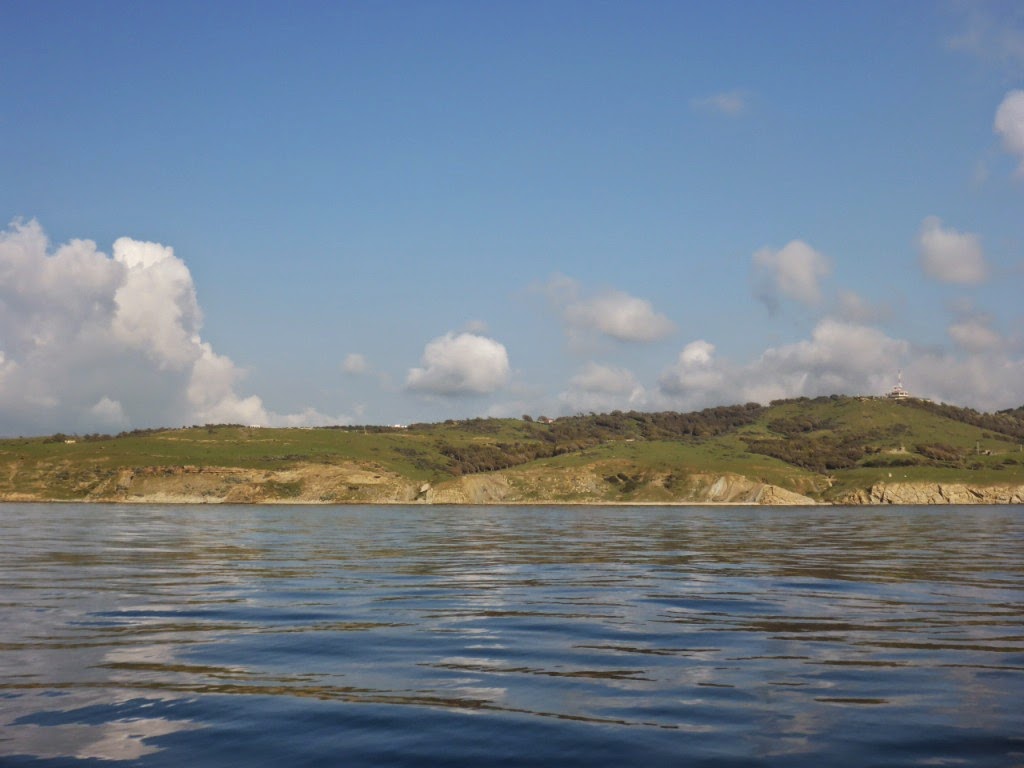

Mer calme et verte colline
Quiet sea and green hills


On voit le Maroc (à 25 km)
We can see Marokko (at 25 km)


La baie d'Algeciras
Bay of Gibraltar


Cargo et ferry rapide


The Rock
Gibraltar


Risanger de Bergen


Je le monte et le redescends bien vite
I hoist it and take it down quickly


Gibraltar, phare et mosquée
Gibraltar, lighthouse and mosque


Ils arrivent de la Méditerranée et attendent pour rentrer dans la baie
They are coming from the Mediterranean and are waiting to go in the bay


Beau temps
Beautiful weather


La Duquesa


On a fini le livre
We are finished with this book


Notre trace
Our trace


Cactus avec une fleur de plusieurs mètres
Cactus with a several meters long flower
La Duquesa. 13.02.2015


Friday, 13 February 2015

12.02.2015 Barbate

Jeudi 12 Février 2015

Il pleut, mais la météo est « bonne », c'est-à-dire peu de vent et du nord, donc on part. Je vais en vélo acheter nos deux journaux, poster une carte postale et en écolo convaincue, trier notre poubelle : papier, verre et emballages. Puis nous partons, Jens est allé dire au revoir à Paul et Herma, mais pas moi et j’en suis désolée, je suis au téléphone juste avant de partir (avec NAV, le système de retraite en Norvège) et ensuite je suis occupée avec les défenses et les cordes. La météo s’avère fausse pour toute la journée : le vent faible du nord est en fait un force 3 de l’Est, donc on l’a dans le nez. On va cabrioler toute la journée, pas comme sur un chameau fou, mais comme sur un chameau guilleret. Peu après la sortie de Cadiz, l’Armada Espagnole nous appelle. Ils font des exercices de tir dans la baie et nous devons nous détourner. Ils nous appellent en disant « velero » (voilier), alors qu’avec AIS, tout le monde peut voir notre nom, mais pas les militaires !  On a lu dans le journal que le roi Felipe est en visite à la base de la marine ici à Cadiz, je m’attends presque à le voir dans un zodiac, mais non. Peu après, nous « heurtons » quelque chose, mais on ne voit rien. Et cela recommence une autre fois. Toujours rien. On en déduit que ce doivent être les tirs des militaires (que nous ne voyons ni n’entendons, c’est loin) qui envoient une onde de choc dans l’eau. Nous continuons et passons le Cap Trafalgar, célèbre par sa bataille navale gagnée par les Anglais. Là, on tourne un peu plus Est et, bien qu’ayant le vent droit dans le nez (donc pas de voile, il faudrait tirer des bords), les vagues arrivent sur le côté et Maja roule. Nous arrivons à Barbate vers 18 h et le bureau est fermé, donc on s’installe à une place. Jens va marcher un peu et peut sortir et surtout re-rentrer, la serrure de la porte du ponton est cassée. Nous allons  marcher 20 mn, Barbate est une grande marina presque vide et un peu abandonnée. Blog rapide, diner préparé par Jens, un peu de lecture et au lit, nous avons eu une longue journée et nous voulons partir de bonne heure demain.
PS : ce blog est écrit en route, le 13, naviguant à la voile 

Thursday, February 12, 2015

It's raining, but the weather forecast is "good", that is to say, little wind and from the north, so we leave. I'll bike to buy our two newspapers, send a postcard and being “green”, sort our trash: paper, glass and packaging. Then we leave, Jens went to say goodbye to Paul and Herma, but not me and I'm sorry, I'm on the phone just before leaving (with NAV, the pension system in Norway) and then I'm busy with fenders and ropes. The weather forecast was not very good today: light wind from the north is actually an easterly force 3, so we have it on the nose. We will be cavorting all day, not like on a crazy camel, but as on a jolly camel. Shortly after leaving Cadiz, the Spanish Armada calls us. They make fire exercises in the bay and we must change course. They call us saying "velero" (sailboat), whereas with AIS, everyone can see our name, but not the military!  We read in the newspaper that King Felipe is visiting the naval base here in Cadiz, I almost expect to see him in a zodiac, but no. Shortly after, we "run into" something, but we see nothing. And another time, the same phenomenon starts again. Still nothing. We deduce that it must be the military shots (we do not see or hear them, it is far away) that send a shock wave in the water. We continue and pass Cape Trafalgar, famous for its maritime battle won by the English. There, we turn a little east and, and despite having the wind right on the nose (so no sailing, it would mean to tack) waves are now arriving on the side and Maja is rolling. We arrive in Barbate at 6 pm and the office is closed, so we moved to a place. Jens goes for a little walk and can come out and especially re-enter, the pontoon gate lock is broken. We walk together 20 minutes, Barbate is a large marina almost empty and a bit abandoned. Quick blog, dinner prepared by Jens, a little reading and to bed, we had a long day and we want to leave early tomorrow.

PS: this blog is written on the way, the 13 th, sailing.


Cadiz sous la pluie
Cadiz under rain


Bye, bye Cadiz


Un bateau de l'Armada Espagnole
A boat from the Spanish Armada


Nous nous dérourons: la ligne continue est l'ancien cap
et la ligne pointillée le nouveau cap
We change course: the continuous line is the old course
ans the dotted line the new one


Jens fait une sieste
Jens takes a nap


Cela bouge
It's moving


Jeannette


Cape Trafalgar


Maja danse
Maja is dancing


Maja danse (2)
Maja is dancing (2)


Au milieu
In the middle


En-bas
Down


En-haut
Up


Ils pêchent avec des lanternes. Barbate
They are fishing with lanterns. Barbate


Barbate


Une drôle de plante
A funny looking plant
12.02.2015. Barbate


Thursday, 12 February 2015

11.02.2015 Cadiz

Mercredi 11 Février 2015

Nous nous levons tôt et Jens part en vélo à 8 h 20 pour San Fernando, une ville à 15 km d’ici pour visiter un collègue sismologiste. La presqu’ile de Cadiz est reliée au continent par une digue où passent le train, la route et une sorte de piste cyclable de terre. Moi je vais me balader seule, il fait beau, retourne le long des remparts, le long de la belle plage qui borde les quartiers modernes et enfin à la Cathédrale. Jens a entendu dire qu’on peut y voir une marque où l’eau du tsunami de 1755, lors du tremblement de terre de Lisbonne, s’est arrêtée. Je me renseigne et non, ce n’est pas à la Cathédrale mais à une autre église, Nuestra Señora de la Plama. J’y vais et, effectivement, il y a une plaque qui commémore le miracle de la Vierge stoppant la montée des eaux. Je retourne aussi me balader sur une petite plage (et deviner ce que j’y fais) et au Castillo San Sebastian. Quand je rentre, ma clé électronique ne marche pas pour entrer sur la ponton. Mais Herma est dehors sur son bateau, je l’appelle et elle vient m’ouvrir. Jens rentre vers 15 h, très content de sa visite. L’institut de San Fernando possède une collection de livres anciens de science tout à fait remarquable et est aussi un musée d’instruments scientifiques et tout ceci est logé dans des locaux du dix-huitième siècle. Le « Real Instituto y Observatorio de la Armada », c’est son nom, a été le premier observatoire astronomique et sismique d’Espagne. Je repars plus tard faire des courses et me perds copieusement, et maintenant il fait gris et il pleuviote. La météo est bonne pour demain et on va partir pour Barbate, le dernier port avant Gibraltar. C’est dommage de partir juste avant le début du carnaval de Cadiz, mais on veut profiter d’une bonne météo pour se rapprocher et passer le détroit de Gibraltar.

Wednesday, February 11, 2015

We get up early and Jens leaves at 8:20 am to San Fernando, a town 15 km away from here to visit a colleague seismologist. Cadiz is a on a peninsula connected to the mainland by a long causeway where the train, the road and a sort of land track, are situated. It is sunny today with a beautiful blue sky. I'm wandering alone, back along the walls surounding the city,  along the beautiful beach which borders the modern districts and finally to the Cathedral. Jens has heard that we can see a mark where the water from the 1755 tsunami, after the earthquake in Lisbon, stopped. I ask some information and no, it is not at the Cathedral but at another church, Nuestra Señora de la Plama. I go there and, indeed, there is a plaque which commemorates the miracle of the Virgin stopping the rising waters. I also walk on a small beach (and guess what I do) and return to the Castillo San Sebastian. When I come home, my key does not work to open the gate to the pontoon. But Herma is outside on her boat, I call her and she comes and opens the gate for me. Jens comes back at about 3 pm, very pleased with his visit. The Institute of San Fernando has a collection of ancient books of science quite remarkable and is also a museum of scientific instruments and all this is housed in the premises of the eighteenth century. The “Real Instituto y Observatorio de la Armada”, it is its name, was the first astronomic and seismic observatory of Spain. I ride later to go shoping  and get really lost, and now it is grey and raining a bit. The weather forecast is good for to morrow and we  leave for Barbate, the last harbor before Gibraltar. It's a shame to leave just before the start of the Carnival of Cádiz, but we want to take advantage of the good weather to get closer and pass the Strait of Gibraltar.


La grande plage
The long beach


La Cathédrale


Eglise La Plama
La palma church


Près du Castillo San Sebastian
Near San Sebastian Castillo


Vieux ramparts et nouveaux bâtiments
Old walls and new buildings


Real Instituto y Observatorio de la Armada
San Fernando


La petite Maja
The little Maja


Corbeille d'argent
Candytuft
11.02.2015. Cadiz


Wednesday, 11 February 2015

10.02.2015 Cadiz

Mardi 10 Février 2015

Quelle nuit! Après le départ de nos invités, je fais la vaisselle et Jens, profitant du vent très fort, teste encore l’éolienne. Nos deux couples de visiteurs l’ont remarquée, notre éolienne, elle est belle et tourne très bien mais si elle donnait de l’électricité, ce serait encore mieux. Puis nous nous couchons. Jens s’endort, mais moi je n’y arrive pas. Le vent est très fort et cela fait beaucoup de bruit. Je me lève et mets en marche l’anémomètre : 17 m/s, ou 33 nœuds/s ou le haut de force 7, dans les rafales. Et il est irrégulier, se calme quelques secondes et repart de plus belle. Cela fait que les cordes qui amarrent le bateau se relâchent un peu et se tendent brutalement peu après. Maja danse un peu, il y a un peu de vagues dans le port, mais le vent nous arrive droit devant et c’est bien. Tout tient mais le bruit m’empêche de dormir. Vers 3 h 30, cela commence à se calmer, mais une corde grince, donc je sors pour l’arranger mais dehors le bruit du vent domine ce grincement et je ne le trouve pas. Mais j’entends un petit cri, je crois que c’est une mouette. Je rentre me coucher et que vois-je ? Un chat qui marche sur la fenêtre qui est dans le toit de notre cabine ! Le petit cri, c’était un miaulement.  Et je m’endors, il est 4 h. Ce matin, nous trouvons Maja pleine de sable, même dedans, je crois que ce sable vient du Sahara, il se passait la même chose à Almuñecar quand on y habitait.  Marc et Margriet partent en fin de matinée, ils vont à Rota. Je fais un tour en vélo pour aller acheter deux journaux, El País et le Diario de Cadiz. Un grand bateau de croisière est dans le port. Puis journée bien calme, il fait gris et je me sens un peu patraque après ma folle nuit. A 17 h 30, nous sommes invités à boire un verre sur « Lena », le bateau de Herma et Paul, les Hollandais. Ils montrent, sur une carte,  pleins d’endroits intéressants en Grèce, ils ont beaucoup navigué là-bas. Leur bateau est très confortable, a du bois à l’intérieur (comme Maja),  il y fait bien chaud et c’est un bon voilier.

 Tuesday, February 10, 2015

What a night! After the departure of our guests, I do the dishes and Jens, taking advantage of the strong wind, tests again the wind turbine. Our two couples of visitors have noticed, our wind turbine, it is beautiful and runs very well, but if it have been producing electricity, it would have been even better. Then we go to bed. Jens falls asleep, but I can’t. The wind is very strong and it makes a lot of noise. I get up and turn on the anemometer: 17 mètres/seconde or 33 knots/second or a top force 7 in the gusts. And it is irregular, calming down for a few seconds and up again. This makes the ropes that moor the boat “relax” a little and then tight suddenly soon after. Maja is dancing a little, there are small waves in the harbor, but the wind comes right in front of us and that's good. Everything holds well but the noise keeps me awake. At about  3:30 am, it starts to calm down a bit, but a rope is squeaking, so I go out to fix it but outside the noise from the wind dominates this squeaking and I don’t find it. But I hear a little cry, I think it's a seagull. I go to bed and what do I see? A cat walking on the window that is in the roof of our cabin! The little cry was a meow. And I fall asleep, at least,  it is 4 ams. This morning we find Maja full of sand, even inside, I think it comes from the Sahara, the same thing happened when we lived in Almuñecar. Marc and Margriet leave this morning, they go to Rota. I ride to buy two newspapers, El País and  the Diario de Cadiz. A large cruise ship is in the harbor. Then a very quiet day, it is gray and I feel a little woozy after my “wild” night. At 5:30 pm, we are invited to have a drink on "Lena",  Herma and Paul’s boat, the Dutch couple. They show, on a map, many interesting places in Greece, they have sailed a lot there. Their boat is very comfortable, has wood inside (like Maja),  is warm and is a good sailing boat.


Le sable
The sand


Le sable
The sand


Le sable, à l'intérieur
The sand, inside


Marc et Margriet partent
Marc and Margriet are leaving


Le bateau de croisière, Oriana
The cruise ship, Oriana


Lena


La pancarte a été renversée par le vent cette nuit
This sign was knocked down by the wind last night


Un énorme arbre. Cadiz
A huge tree. Cadiz


Tuesday, 10 February 2015

09.02.2015 Cadiz

Lundi 9 Février 2015

Les Norvégiens partent en début de matinée vers l’ouest, ils remontent vers la Norvège. Il fait beau mais le vent n’est pas chaud et souffle de plus en plus fort. Nous partons en vélo, d’abord au bureau de tourisme où ils nous donnent un plan et le programme du carnaval qui commence jeudi. Le carnaval de Cadiz est renommé et de nombreux visiteurs sont attendus en ville. Puis nous faisons le tour de Cadiz en longeant la muraille. Quelle ville ! Attaquée  maintes fois par les pirates, les arabes, les Visigots, les Anglais et j’en passe. Nous allons voir le castillo de San Sebastian, un des forts qui défendaient la ville et, en passant, descendons sur une petite plage et faisons une bonne récolte de bouts de verre. Dans le fort lui-même, je vois une tache de couleur sur un talus et, m’approchant, je vois de très jolies fleurs, sorte de crocus. Quelle chance, je commençait à douter de trouver une fleur aujourd’hui, ici, en ville. Nous allons ensuite au centre par les petites rues étroites et longues et, l’heure avançant, nous arrêtons près du marché  pour déjeuner sur une terrasse, à l’abri du vent. Repas très correct pour 11 € chacun, 11 parce que nous prenons dessert et café. Le vent fait tomber des panneaux publicitaires, cela souffle bien. Nous faisons des courses à un Carrefour en ville et reprenons le chemin de la marina. En rentrant on dirait qu’il y a du brouillard sur la mer, mais ce n’est pas cela : c’est du sable ! Il souffle une espèce de tempête de sable, cela pique les yeux et la peau. Jens travaille toujours à tester l’éolienne, il a bricolé un « truc » qui mesure le (peu de !) courant donné par l’éolienne à l’aide de deux ampoules électriques. Je couds un peu et me mets au blog. Nous dinons léger puis Jens va inviter nos voisins pour une tasse de café. Marc et Margriet sont belges, allant vers l’ouest et Herma et Paul sont hollandais allant vers l’est, comme nous. Toujours sympa de rencontrer de nouveaux navigateurs et nous passons une très bonne soirée, un peu ballotés par le vent qui augmente encore. Tous ont renforcé les amarres, un coup de vent est prévu pour cette nuit.

Monday, February 9, 2015


The Norwegians couple leave early in the morning, to the west, they are on they way back to Norway. The weather is nice but the wind is blowing more and more. We start cycling, first to the tourist office where they give us a plan and a program for the Carnival which starts Thursday. The Carnival of Cadiz is famous and many visitors are expected in town. Then we go around Cadiz along the wall. What a city! Repeatedly attacked by pirates, Arabs, Visigoths, English, and so on. We go to see the castillo de San Sebastian, one of the forts defending the city and, in passing, go down on a small beach and make a good crop of pieces of glass. In the fort itself, I see a spot of color on a slope and, approaching, I see very pretty flowers, a kind of crocus. How lucky, I was not sure to find a flower today here, in town. We ride then to the center by small, narrow and long streets, and being a little hungry, we stop near the market for lunch on a terrace, sheltered from the wind. Very decent meal for € 11 each, 11 because we take dessert and coffee. The wind toppled a billboard, it is really blowing. We go shopping at a Carrefour in the city and we starts riding home. Returning, it seems that there is fog on the sea, but it's not that: it is sand! A kind of sandstorm is blowing, it stings the eyes and the skin. Back on Maja, Jens is still working on testing the wind turbine, he put together a "trick" that measures the (little) electricity produced from the wind turbine, using two light bulbs. I sew a bit and work with the blog. We dine light and Jens go and  invite our neighbors for a cup of coffee. Marc and Margriet are Belgian, westbound and Herma and Paul are Dutch, eastbound like us. Always nice to meet new navigators and we spend a very good evening, a little tossed by the wind which is still increasing. All have reinforced the moorings, a gale force wind is expected tonight.


Nous faisons du pain grillé sur le poêle
Toasts on the stove


Les Norvégiens s'en vont
The Norwegians are leaving


Cadiz vue du ciel
Cadiz seen from the sky


Eglise
Church


Portes
Gates


Un fort


Rue
Street


Ce n'est pas du brouillard, c'est du sable
It's not fog, it's sand


La récolte de bouts de verre
The harvest of pieces of glass


Jens fait des tests de l'éolienne
Jens is testing the wind turbine


Herrma, Paul


Marc, Margriet


Crocus?
09.02.2015. Cadiz