Tuesday, 28 March 2017

27.03.2017 Puerto de San Jose - Marina del Este ?

Mardi 28 mars 2017

Il fait très beau, calme. 
Nous partons directement pour Marina del Este, à peu près 90 miles nautiques, une vingtaine d'heures.
Pas de blog aujourd'hui.
A bientôt

Tuesday, March 28, 2017
Beautiful weather, quiet.
We leave directly for Marina del Este, about 90 nautical miles, around twenty hours.
No blog today
See you soon


27.03.2017. Puerto de San Jose

Monday, 27 March 2017

26.03.2017 Puerto de San Jose

Dimanche 26 mars 2017

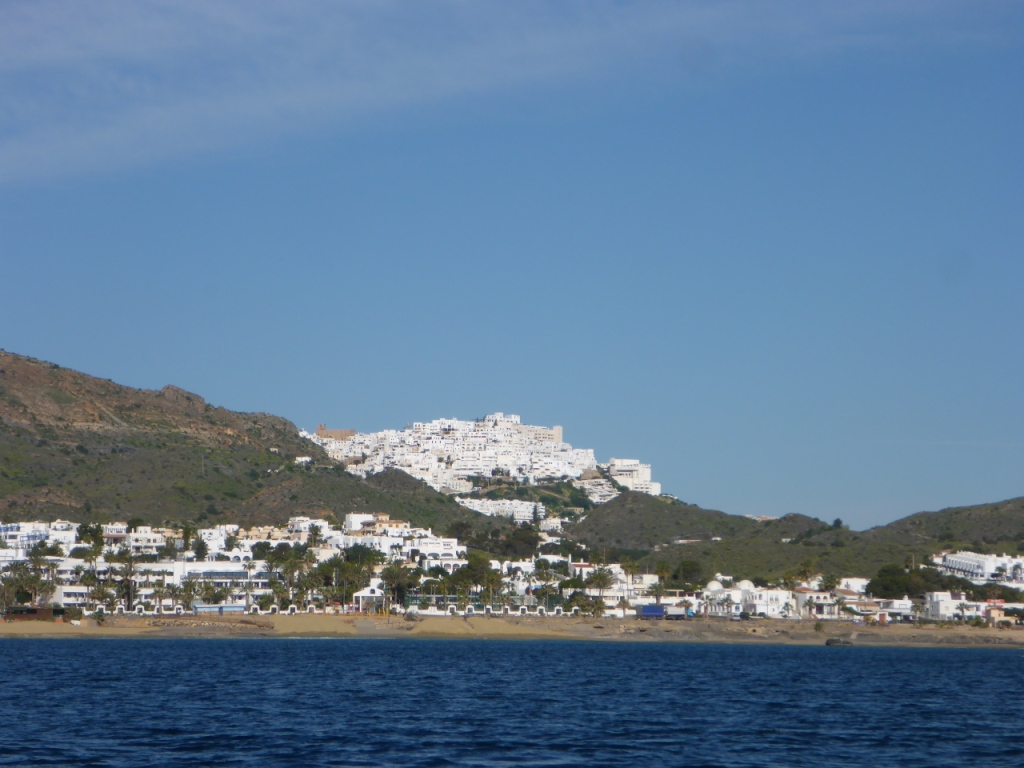
Calme, le vent a tourné ouest et est faible. Nous changeons d’heure, comme tout le monde. Jens va rendre la clé, et pour revenir, passe autour de la porte du ponton, comme en 2015. Nous partons à 9 h 50. Nous voyons le village blanc de Mojacar où nous étions montés en avril 2015. C’était la première vraie promenade en vélo après la fracture de mon poignet, je faisais du vélo d’une main et je me souviens que j’avais acheté des aiguilles à tricoter dans ce village. La traversée est toute tranquille, vent léger, F 2, de terre, foc et moteur. Il fait beau, c’est idyllique. A 11 h 45, nous passons devant l’Hôtel Illégal, un hotel construit dans un parc national. Jens regarde sur Internet, la cour suprême espagnole a rendu un jugement en février 2016 pour qu’il soit démoli. Mais il est toujours là, en mars 2017. Nous longeons trois ports, le premier de pêcheurs et les deux autres industriels qui sont interdit aux plaisanciers, sauf en cas d’urgence. Bon lunch, couture pour moi, sudoku, musique pour Jens. Le temps passe vite sutout que l’on longe la côte d’assez près et qu’il y a toujours quelque chose à voir. Nous arrivons au Puerto de San José à 15 h 40, un petit port juste avant le Cabo de Gata (le Cap de la Chatte). Il a l’air bien plein, mais un marinero nous fait signe de nous mettre entre deux voiliers. La place est étroite, mais Maja n’est pas large, ça va juste. Très joli port et assez animé, nous sommes dimanche. Un couple espagnol sur un voilier un peu plus loin vient nous dire qu’ils avaient un Fisher 31 avant et que c’est un très bon bateau. Nous sommes bien d’accord. Sur le voilier voisin, un moineau siffle. Je lui donne du pain et il disparait dans la bôme ! Peut-être a-t-il un nid dedans ?

Distance Garrucha- Puerto de San Jose: 31 mn/nm
Total Bergen-Puerto de San Jose: 7573 mn/nm (13 631 km)

Sunday, March 26, 2017

Quiet this morning, the wind turned west and is weak. We change our time, like everyone else. Jens returns the key, and back goes around the gate to come on the pontoon, like in 2015. We leave at 9:50 am. We see the white village of Mojacar where we rode in April 2015. It was the first true ride after my wrist fracture, I was riding with one hand and I remember buying knitting needles in this village. The crossing is calm, light wind, F 2, from land, jib and motor. It's idyllic. At 11.45 am, we passed the “Hotel Illégal”, a hotel built in a national park. Jens looks on the Internet, the Spanish Supreme Court issued a ruling in February 2016 for it to be demolished. But it is still there in March 2017. We are motoring along three harbors, the first one a fishing harbor and the other two industrial which are prohibited to boaters, except in case of emergency. Good lunch, sewing for me, sudoku, music for Jens. Time passes quickly as we follow the coast close enough and there is always something to look at. We arrive at Puerto de San José at 3:40 pm, a small harbor just before Cabo de Gata . It looks full, but a marinero shows us a small place between two sailboats. It’s quite narrow, but Maja is not wide, it's just right. Very pretty harbor and quite lively, we are Sunday. A Spanish couple on a sailboat a little further on tells us that they had a Fisher 31 before and that it is a very good boat. We agree. On the neighboring sailboat a sparrow is whistling. I give him bread and he disappears into the boom! Maybe he has a nest in it?


Bye, bye Garrucha


Idyllique


Mojacar, le village blanc
Mojacar, the white village


Tour
Tower


L'hôtel illégal est toujours là
The illegal hotel is still there


Les trois ports où on ne peut pas aller
The three harbors where we can't go


Un des ports industriels
One of the industrial harbors


Je répare l'attache d'un torchon
I am fixing a dish towel


Le foc fait flop, flop, il n'y a plus de vent du tout
The jib is making flop, flop, the wind has died completely


Nous approchons de Puerto de San Jose
We are near Puerto de San Jose


Entrée du port
Harbor entrance


Juste une place pour nous
Just room for Maja


La/The promenade


Première fois que nous dinons dehors
First time we dine outside


Le moineau
The sparrow


26.03.2017. Puerto de San Jose
Dans un jardin
In a garden


Sunday, 26 March 2017

25.03.2017. Garrucha

Samedi 25 mars 2017

Ce matin, c’est tout calme. Je vais sur les pontons, en vélo, mais ne trouve pas de bleus. Je vais aussi sur la digue et me fais arrêter par un garde, c’est privé. Je lui dis que je n’avais pas vu la pancarte à l’entrée de la digue, et c’est vrai. Les camions défilent sans arrêt, même un samedi. Il faut surement des centaines de camions pour remplir un si grand navire. Pendant ce temps, Jens répare la porte. Les roulements sont usés, et la porte ne roule plus bien. Il trouve, dans une quincaillerie qui a de tout, des roulettes qui vont juste. Et voilà, la porte roule bien. Ensuite, nous partons tous les deux dans la campagne derrière Garrucha. C’est plat, d’abord un peu marécageux puis cultivé plus loin, de grands champs de broccolis. Mais ce n’est pas une belle campagne, c’est fouillis, sale. Nous prenons de petits chemins de terre qui, eux, sont pleins de fleurs. Retour vers la côte, plus à l’ouest de Garrucha, à Vera. Nous roulons sur la grand route et Jens est loin devant. A un carrefour, je reconnais une boutique de vélos où il faut tourner. Il est si loin qu’il ne peut pas m’entendre, alors je lui téléphone. Il revient et nous tournons ensemble vers la mer. Pendant notre promenade, le vent s’est levé, très fort et ce port est ouvert vers le sud et les vagues rentrent dedans. Nous trouvons Maja gambadant le long de son quai. Ce n’est pas agréable, elle bouge vraiment beaucoup et il y a trop de vent pour manger dehors. Nous décidons donc d’aller au restaurant. C’est drôle, deux restaurants sont côte à côte. L’un est vide et l’autre plein et nous allons au deuxième, bien sûr. C’est une terrasse couverte donc à l’abri du vent. Nous prenons quatre demi-portions et nous avons bien assez. Le service est assez lent, mais c’est très bien comme ça, on n’a guère envie de retourner sur notre Maja dansante. Après déjeuner, nous allons voir Maja et Jens rajoute encore une corde. Maintenant, elle en trois devant, une au milieu et deux derrière. Le voisin sur un grand catamaran nous dit qu’il a mesuré le vent à F8 dans les claques! Maja est bien sécurisée, et nous allons faire une longue promenade à pied le long de la plage. Ensuite, il faut bien rentrer, mais une fois à l’intérieur, ça va, Maja bouge mais on n’entend pas le bruit du vent. Je fais le blog, Jens va faire des courses et notre diner consiste en une tasse de thé et une tartins. A 18 h, le vent baisse très rapidement et tout redevient calme. Jens range les vélos, nous partons demain.

Saturday, March 25, 2017
This morning, no wind at all, it's all calm. I go on the pontoons, by bike, but find no blues. I also go to the dyke and get stopped by a guard, it's private. I told him I had not seen the sign at the entrance to the dike, and that's true. The trucks are coming and going, even on a Saturday. It must take hundreds of trucks to fill such a large ship. While I'm away, Jens is fixing the door. The small wheels are very worn out and the door doesn't roll well. He finds exactly what he needs at the local harware store and can fix it. Then we both ride into the countryside behind Garrucha. It is flat, at first marshy and then, further on, cultivated, large fields of broccoli. But it's not a beautiful countryside, it's messy and dirty. We take small dirt roads, which are full of flowers. Back to the coast, we are further west of Garrucha, in a place called Vera. We ride on the main road and Jens is far ahead. At a crossroads, I recognize a bicycle shop where we have to turn left. He's so far away that he can’t hear me, so I phone him. He comes back and we turn together towards the sea. During our walk, the wind has risen, very strong, this harbor is opened towards the south and the waves are coming in. We find Maja jumping up and downalong her pontoon. It’s not pleasant to be on board, it really moves a lot and there is too much wind to eat outside. So we decide to go to a restaurant. It's funny, two restaurants are side by side. One is empty and the other full and we go, of course, to the second one. It is a covered terrace so sheltered from the wind. We take four half portions and we have enough. The service is pretty slow, but we appreciate it, we don’t want to go back on our dancing Maja. After lunch, we'll see Maja and Jens add another rope. Now she has three in front, one in the middle and two behind. The neighbor on a large catamaran tells us that he measured the wind at F8 in the gusts! Maja is well secured, and we go for a long walk along the beach. Then we have to go back, but once inside, it's OK, Maja is moving but we don’t hear the sound of the wind. I do the blog, Jens goes shopping and our dinner consists of a cup of tea and a toast. At 6 pm, the wind drops very quickly and everything becomes calm again. Jens takes the bikes on Maja, we leave tomorrow.


Une des deux roulettes usées à la porte
One of the two worn out small wheels, on the door


Jens répare
Jens is fixing it


Et voilà
And voilà


C'est calme
It's quiet


Les camions
The lorries


Les camions
The lorries


Port de pêche. Un filet qui n'a pas du servir depuis longtemps
Fishing harbor. A fishing net which has not been used for some time


C'est plat
It's flat


Champs de broccolis
Broccolis fields


Chemins de terre
Dirt road


Chemin fleuri, même au lieu
Flowery path, even in the middle


"Urbanización", résidences touristiques
"Urbanización", tourists residences


Maintenant, le vent est fort
Now it's really blowing


Dans le restaurant, un groupe d'hommes fêtent quelque chose
Ils ont une poupée en papier
In the restaurant, a group of men celebrate something
They have a paper doll


Maja. Les cordes se relâchent
Maja. The lines slacken


Maja. Les  cordes se tendent
Maja. The lines tighten


Palmiers ébouriffés sur la plage
Disheveled palm trees on the beach


25.03.2017. Garrucha


Saturday, 25 March 2017

24.03.2017. Garrucha

Vendredi 24 mars 2017

Levés à 5 h 30, nous partons à 6 h 45 quand le jour commence à se lever. Il fait « froid », seulement 10 ⁰. Peu de vent, de terre, donc pas de vagues. Nous passons tout près des navires qui attendent pour rentrer dans le port de Cartagena. Jens, qui a mal dormi, va faire une bonne sieste puis c’est mon tour. Nous n’avançons pas très vite, le compteur marque 5,5 nœuds (vitesse par rapport à l’eau) et le compteur du navigateur marque 4,8 nœuds (vitesse par rapport au fond). C’est un courant qui nous ralentit. En passant le Cap Tiñoso, le vent baisse complètement et la girouette tourne dans tous les sens. Mais cela ne dure pas. Le vent tourne et se relève. Maintenant, il est du sud-ouest, donc presque en face de nous. Nous sommes au près serré. Nous avons la grand-voile bien serrée et le moteur. Et le vent et les vagues augmentent. A 14 h 15, nous écoutons une météo espagnole à la radio VHF qui ne me rassure pas : coup de vent F 8-9 à Barcelone, F 7-8 aux Baléares ! Heureusement ce ne sera que F 5 par ici. Nous ne sommes pas encore arrivés et les deux dernières heures ne passent pas vite. Maja gite, cogne dans les vagues et est bien aspergée. J’espèrais que plus nous approchons de la côte, moins il y aurait de vagues, que nous serions un peu à l’abri de la terre. Mais non, le vent et les vagues suivent la côte. Nous arrivons à 16 h 45 (donc après 10 heures de navigation) dans le port de Garrucha, où nous nous étions arrêtés en avril 2015. Nous nous mettons d’abord le long d’un ponton à l’entrée du port, mais on ne peut pas rester là, c’est trop exposé. Nous allons ensuite à un ponton plus à l’intérieur mais du mauvais côté, le vent pousses Maja vers le ponton et les pauvres défenses sont à moitié écrasées. Un marinero nous conseille une troisième place, du bon côté cette fois, où le vent éloigne Maja du ponton. Jens met 5 amarres, le vent est toujours fort et des vagues rentrent dans le port. Ouf ! On est bien content d’arriver. Un chien noir vient nous voir, il est tout ébourifé par le vent. Ankerdram et chips de betteraves, carottes et navets, c’est bon. Petite promenade en ville, nous essayons de reconnaitre une pizzeria où nous avions diné en 2015. Et nous y retournons. Une bonne pizza, une salade et deux bières pour 15 €. Dans la soirée le vent tombe et c’est tout tranquille.

Cartagena-Garrucha: 49 mn/nm
Total Bergen-Garrucha: 7542 mn/nm (13 575 km)

Friday, March 24, 2017
We get up at 5.30 am and we leave at 6.45 am when the day begins to rise. It is "cold", only 10 ⁰. Little wind,from land, so no waves. We pass closed by the ships waiting to enter Cartagena harbor. Jens, who slept badly, takes a good nap, then it's my turn. We don’t go very fast, the speedometer shows 5.5 knots (speed in the water) and the speedometer on the plotter shows 4.8 knots (speed on the bottom). It is a current that slows us down. Passing Cape Tiñoso, the wind drops completely and the wind vane turns in all directions. But that does not last. The wind turns and rises. Now it comes from the southwest, so almost in front of us. We are close to the wind. We have the mainsail tight and the engine. And the wind and the waves increase. At 2:15 pm, we listen to a Spanish weather forecast on the VHF radio that doesn’t reassure me: gale F 8-9 in Barcelona, ​​F 7-8 in the Balearic Islands! Fortunately it will only be F 5 around here. We have not yet arrived and the last two hours don’t pass quickly. Maja is heeling, crashes in the waves and is well sprayed. I hoped that the closer we got to the coast, the less waves there would be, that we would be a bit protected by the coast. But no, the wind and the waves follow the coast. We arrive at 4:45 pm ( so after 10 hours nvigation) in the port of Garrucha, where we had stopped in April 2015. We put ourselves first along a pontoon at the entrance of the port, but we can't stay there, it’s too exposed. We then go to a pontoon more inside but on the wrong side, the wind pushes Maja towards the pontoon and the poor fenders are half flattened. A marinero shows us a third place, on the right side this time, where the wind pushes Maja away from the pontoon. Jens puts 5 mooring lines, the wind is still strong and waves enter the harbor. Phew! We are very happy to arrive. A black dog comes to see us, it is all ruffled by the wind. Ankerdram and chips of beetroot, carrots and turnips, that's good. Small walk in town, we try to find again a pizzeria where we had dinner in 2015. And we go back there. A good pizza, a salad and two beers for 15 €. In the evening the wind falls and all is quiet again.


Bye, bye Cartagena


Capitaine Jens
Captain Jens


Nous passons devant un navire ancré qui attend
We pass in front of an anchored ship, waiting


Le même
The same one


Nous avons programmé notre destination, Garrucha
We put our way-point, Garrucha


Fumée à Mazzaron
Smoke in Mazzaron


Les serres de plastiquee commencent
The plastic green houses are starting


Bon lunch
Les jaunes sont: fromage, moutarde et miel. A conseiller
Good lunch
The yellow ones are: cheeze, mustard and honning. Very good


Le vent se lève et les embruns aussi
The wind is increasing and the splashes too


Maja cogne dans le vagues
Maja crashes with the waves


Où est le pantalon de Jens?
Where are Jens' pants?


Ici
Here


Au milieu, c'est un navire et les deux autres sont des remorqueurs
Le navire va rentrer dans le port de Garrucha
The one in the middle is a big ship, the other two are tugs
The ship is going to enter Garrucha harbor 


La mer est bien blanche
The sea is quite white


Le navire qui vient de rentrer. Nous arrivons dans le port
The ship which is just arrived. We enter the harbor


Il met des plaques anti-rats sur les cordes
He is putting plates anti-rats on the lines


Le ballet des camions qui apportent le gypse qui va être chargé sur le navire
(Ils ne se rentrent pas dedans, ils se croisent)
Lorries bringing gypsum which is going to be charged onto the ship
(They are not crashing into each other, they are crossing each other)


Le chien noir
The black dog


Après deux tentatives infructueuses, Maja est enfin au ponton
After two unsuccesful  attempts, Maja is, at least, docked along the pontoon


Cartagena-Garrucha


Hibiscus double
Double hibiscus
24.03.2017. Garrucha