Monday, 26 January 2015

25.01.2015 Lisbonne/Lisbon

Dimanche 25 Janvier 2015

Il fait froid! On met l’air conditionné “à l’envers” et on chauffe ainsi la chambre. Mais la salle du petit-déjeuner n’est pas chauffée et on n’y reste pas longtemps. La voiture est pleine de givre, il a gelé cette nuit. Nous partons vers les salines, à 3 km de Rio Maior. Il fait un temps splendide et le paysage est très joli. Les salines ne sont pas en activité l’hiver, cela reprendra en mars. C’était toute une communauté qui vivaient ici et exploitait le sel. De petites maisons de bois bordent les marais salants, mais maintenant la plupart sont transformées en restaurants et cafés. Nous avons la place pour nous tout seuls, un dimanche matin assez tôt, en janvier. Une pancarte indique une promenade de 3,5 km dans les collines. Nous partons donc et marchons vite pour nous réchauffer. Le chemin est bien marqué, est d’abord à l’ombre mais plus ouvert un peu plus tard. La différence de température entre l’ombre et le soleil est importante: on gèle à l’ombre et on a vite trop chaud au soleil. Nous revenons à notre point de départ après 55 mn de marche. Cela fait du bien de marcher dans la nature. Nous partons et Børge nous emmène vers la mer par des petites routes, nous y arrivons au sud de Peniche, vers Porto Novo. C’est bon de revoir la mer, elle est bleue et tranquille, un bon temps pour naviguer. Nous marchons un peu sur la plage et repartons. Nous faisons des courses dans un petit supermarché et allons pique-niquer à Assenta.Une pancarte indique “Porto de Assenta”, et comme on aime les bateaux on va au port. Ce n’est pas vraiment un port, mais une rampe où les bateaux sont parqués. En descendant, et c’est raide, un petit restaurant est tout plein, les voitures stationnées un peu partout. Nous, nous allons manger sur la plage, c’est magnifique, et comble de bonheur, nous trouvons pleins de bouts de verre, même 3 bleus et un rouge. Le bonheur! Nous repartons et nous rapprochons de Lisbonne. Le pauvre Børge est perdu parmi les nouveaux ronds-ponts et nouvelles autoroutes. On tourne et on retourne mais on arrive quand même à l’hôtel où Jens a réservé. C’est un “apartment-hotel”, et nous avons un vrai petit appartement. D’abord on ne voit pas la cuisine: elle est dans un placard! Nous allons faire des courses à un Pingo Doce et dinons à la maison. Un avocat avec huile d’olive et citron, une bonne soupe de poissons réchauffée au micro-ondes, fromage et “tarta de nata”, le bon gateau portuguais, le tout arrosé d’un vin d’Alentejo à 2 € la bouteille. Il fait beaucoup plus doux ici, 17⁰  en fin de soirée. 
  
Sunday, January 25, 2015

It's cold! We put the air conditioning "backwards" and thus are heating the room. But the breakfast room is not heated and we eat quickly. The car is full of frost, it froze last night. We leave towards the salt marshes, 3 km out of Rio Maior. It is a bright day and the landscape is very pretty. The salines are not active in winter, it will resume in March. It was a community that lived there and operated the salt. Small wooden houses line the salt marshes, but now most are transformed into restaurants and cafes. We have the place to ourselves, early one Sunday morning, in January. A sign indicates a 3.5 km walk in the hills. So we walk there and quickly to warm us up. The path is well marked, and is first in the shade but more open later on. The temperature difference between the shade and the sun is important: it's freezing in the shade and it soon became too hot in the sun. We return to our starting point after 55 min walk. It feels good to walk in nature. We leave and Børge takes us to the sea through small roads, we get there south of Peniche near Porto Novo. It's good to see the sea again, it is blue and quiet, a good time to navigate. We walk a little on the beach and off again. We go shopping in a small supermarket and go picnicking in Assenta. A sign reads "Porto de Assenta" and as we like boats we go to the port. This is not really a port, but a ramp where boats are parked. Down, and the road is steep, a little restaurant is full, cars parked everywhere. We are going to eat on the beach, it is beautiful, and even better, we find lots of pieces of glass, even three blue and one red. Happiness! We leave and get closer to Lisbon. The poor Børge is lost among the new round-abouts and new highways. We turn and turn but find at the end the hotel where Jens has made a reservation. It is an apartment-hotel, and we have a little apartment. First we do not see the kitchen, it is in a closet! We go shopping at Pingo Doce and dine at home. An avocado with olive oil and lemon, a good fish soup warmed in the microwave, cheese and "tarta de nata", the good Portuguese cake, all washed down with a wine from Alentejo at 2 € a bottle. It is much warmer here, 17⁰ in late evening.


C'est du givre
It is frost


Salinas, Rio Maior


Les petites maisons de bois
The small wooden houses


Salinas


Il y a encore du givre à l'ombre
Frost on plants in the shade


Promenade
Walk


Le chemin est bien marqué
The path is well marqued


Village


La mer
The sea


Une plage
A beach


Le "port" à Assenta
The harbor at Assenta


La rampe pour mettre les bateaux à l'eau
The ramp to put the boats into the water


Pique-nique
Picnic


Jens cherche des bouts de verre
Jens is looking for pieces of glass
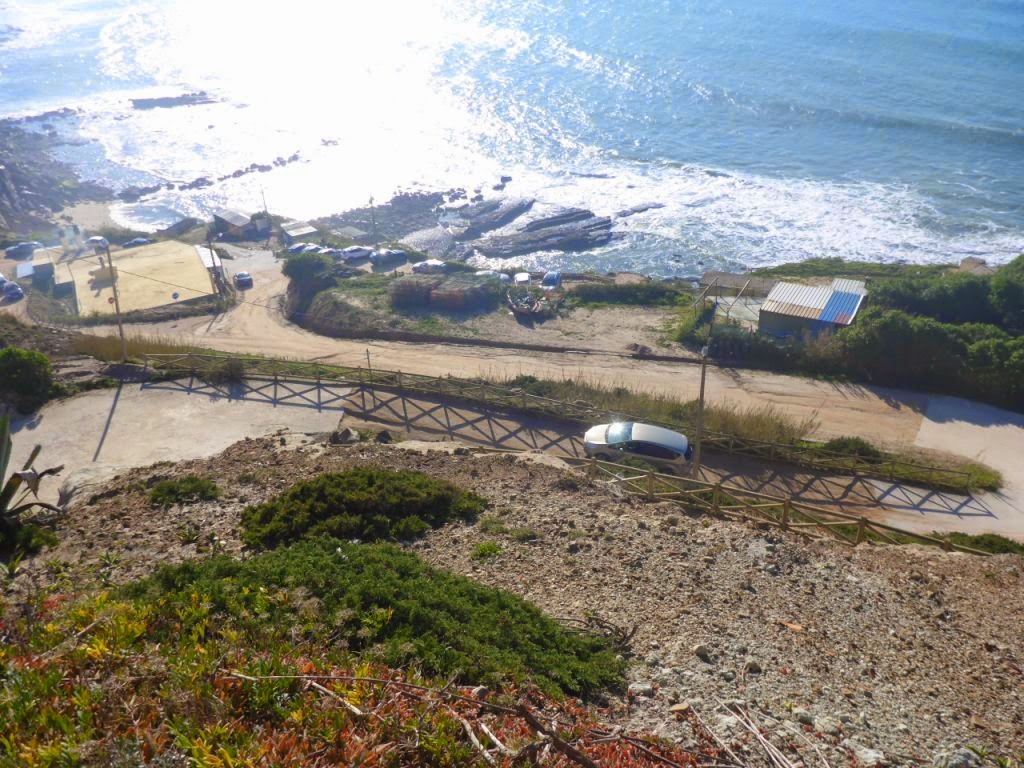

La route en lacets et raide, pour descendre
The winding road, very steep, to go down 


La petite fleur jaune citron est partout
The small yellow flower is everywhere


Où est la cuisine?
Where is the kitchen?
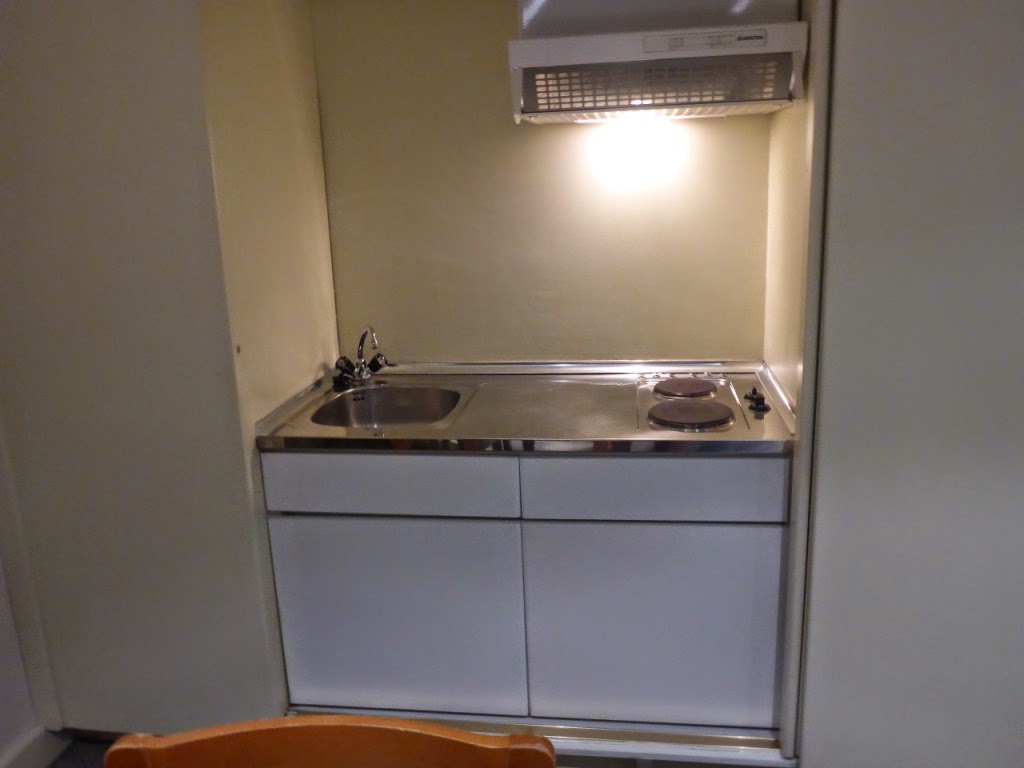

Elle est là
Here it is


Bouts de verre
Pieces of glass


25.01.2015. Rio Maior


Sunday, 25 January 2015

25.01.2015 Lisbonne/Lisbon

Bien arrivés à Lisbonne. Il est tard, j'écrirai le blog demain.

Well arrived in Lisbon. It is late, I'll write the blog to morrow.


Saturday, 24 January 2015

24.01.2015 Rio Maior

Samedi 24 Janvier 2015

Hier soir, nous sommes allés diner dans un restaurant de tapas, très bon et sympa. Le propriétaire, à peu près 40 ans, parlait espagnol et il nous a expliqué qu’enfant il regardait toujours la télé espagnole et qu’ainsi il a appris la langue; Évora n’est qu’à une quarantaine de km de la frontière. Pendant que nous dinions, lui et un autre homme discutaient de vin et le propriétaire en goûtait. Le deuxième homme était un producteur de vin quil parlait français  et a discuté un peu avec Jens.
Ce matin, nous devions aller remettre des euros au stationnement payant à 9 h. Donc nous sommes partis nous promener et visiter Évora à 9 h. Quelle idée! Il n’y avait pas un chat dans les rues et il faisait un froid de canard, pas plus de 5-6 ⁰.  Mais le soleil nous a bien réchauffés quand il est sorti. A 10 h, nous achetions 6 bouteilles au producteur d’hier qui a une boutique en ville, un bon vin pour 8,5 €, Jens est ravi. Nous avons bien marché et vers 11 h, nous reprenions la route. Journée splendide aujourd’hui, ensoleillée et plus chaude, 15 ⁰ dans l’après-midi. Nous avons fait des tours et des détours par de petites routes. Évora, Montemor-O-Novo,  Lavre, un petit village un peu endormi où nous avons pris un café à la Taberna Antigua. Tous les autres clients (3) étaient des hommes de 70 ans et plus. Nous roulons et la campagne est belle, un peu d’élevage et culture de chêns-liège. Les exploitations sont immenses, pas de petites fermes, et les habitations sur les fermes sont de grandes maisons imposantes, parfois même de véritables manoirs. Nous nous arrêtons pour le lunch sur une petite route, tout est privé et entouré de grillages. De Lavre, nous allons à Coruche, Raposa, Marianos, Chouto, Chamusca, Golega. Cela ne vous dit pas grand chose, mais ce sont de petits villages et de petites routes. Nous voyins un grand arbre plein de nids de cigognes. Quand je m'approche, elles n'aiment pas cela et font du bruit en claquant leurs becs, on dirait des castagnettes. A Golega, nous nous perdons et demandons l’assistance de Børg, notre GPS. Il nous emmène par l’autoroute, lui. Nous pensions nous arrêter à Alcanena, près d’un parc nationnal, mais on ne voit pas d’hôtel et on continue jusqu’à Rio Maior et là on trouve un hôtel. Promenade dans la ville, moderne et assez animée, c’est samedi et il fait beau. Bonne journée dans une belle région peu peuplée du Portugal. 

Nous dinons dans un café où de nombreux hommes boivent une boisson qui ressemble à de la bière brune en regardant un match de foot à la télé. Sur le mur, une grande peinture montre des marais salants. Ici, dans une région un peu montagneuse? Rentrés à l’hôtel, Jens google Rio Maior, et c’est vrai, à l’extérieur de la ville, des salines produisent des tonnes de sel. Cette exploitation est très ancienne, les Romains le faisaient déjà et l’eau contient 8 fois plus de sel que l’eau de mer. On ira voir ça demain.

Saturday, January 24, 2015

Last night we went to dinner at a tapas restaurant, very good and friendly. The owner, about 40 years old, spoke Spanish and he explained to us that as a child he always watched  Spanish TV and so he learned the language; Évora is only about forty miles from the border. While we dined, he and another man were discussing wine and the owner tasted several whines. The second man was a wine producer who spoke French and talked a bit with Jens.
This morning, we had to put euros in the the parking automat at 9 am. So we went for a walk and visit Évora at 9 am. What an idea! There was not a soul in the streets and it was freezing cold, no more than 5-6 ⁰. But the sun warmed us when it came out. At 10 pm we bought 6 bottles of whines from the producer we met yesterday, he has a shop in town, a good wine for € 8.5 Jens is delighted. We walked in the city and at around 11 am, we resume our trip. Beautiful day today, sunny and warmer, 15 ⁰ in the afternoon. We made some twists and turns through small roads. Évora, Montemor-O-Novo, Lavre, a small village a little sleepy when we had coffee at the Taberna Antigua. All the other clients (3) were men over 70 years.  We drove and the countryside is beautiful, some livestock and crop of cork oaks. The farms are huge, not small farms here, and the houses on the farms are large stately homes, sometimes even real mansions. We stop for lunch on a small road, everything is private and surrounded by fences. From Lavre, we go to Coruche, Raposa, Marianos, Chouto, Chamusca, Golega. This does not tell you much, but they are small villages and small roads. 
We see many stork's nest in a big tree and when they see me approaching, they don't like it and make a lot of noise slamming their beaks, like castagnette.
In Golega, we get lost and ask the assistance of Børg, our GPS. He takes us on the motorway. We thought of stoping in Alcanena, near a nationnal park, but we do not see a hotel and continue to Rio Maior and there we find a hotel. Walk in the city, modern and quite busy, it's Saturday and the weather is nice. Good day in a beautiful sparsely populated region of Portugal.

We dine at a cafe where many men drink a beverage that looks like dark beer while watching a football game on TV. On the wall, a large painting shows salt marshes. Here, in a rather mountainous region? Back to the hotel, Jens googles Rio Maior, and it's true, outside of the city, salt marshes produce tons of salt. This operation is very old, the Romans were already doing it and the water contains 8 times more salt than sea water. We'll see it tomorrow.


Évora


Évora


Une des portes de le ville. Évora
One of Évora's gates


Galerie


Taberna Antigua. Lavre


Un chêne-liège
A cork oat


Système anti-cigogne sur des poteaux
Anti-stork system on poles


Pique-nique
Picnic


Plantation de chênes-liège
Cork oaks plantation


Gros cocon sur un pin
Big cocoon on a pine tree


Un autre
Another one


Les ageaux sont déjà nés ici
Lambs are already born here


Un grand eucalyptus pleins de nids de cigognes
A big eucalyptus full with stork's nests


Le même arbre, vue de plus près
The same tree, seen closer


24.01.2015. Lavre


Friday, 23 January 2015

23.01.2015 Évora

Vendredi 23 janvier 2015

Après un bon petit-déjeuner, nous partons, à pied visiter Serpa. Il fait froid et gris, mais cette ville nous séduit. Elle est très bien entretenue, les différents monuments bien indiqués mais d’une façon discrète et elle pas trop grande. Nous allons voir le chateau et les remparts, de là on a une belle vue sur la campagne. Puis nous venons récupérer la voiture et allons vers Moura. Toute cette région est plantée d’oliviers et à Moura une grande ccopérative fait l’huile. Moura a une station thermale mais qui est fermée en ce moment. Nous nous promenons un peu à Moura et allons prendre un café pour nous réchauffer. Jens a mis deux pulls l’un sur l’autre et moi j’ai mis un T-shirt en dessous, mais on a l’impression d’avoir froid tout le temps (sauf dans la voiture, quand même). Nous nous arrêtons près d’un grand lac formé par un barrage sur le Guadiana pour pique-niquer. Et on continue, sans nous presser, en faisant un détour vers Monsaraz, un village fortifié perché sur une colline. C’est spectaculaire et plusieurs grands parkings, heureusement vides à cette saison, témoignent de la popularité de ce village. Nous nous dirigeons ensuite vers Évora, la capitale de la région, ville aussi historique. Nous trouvons le bureau de tourisme et la dame nous indique un hôtel central. Première question de Jens: les chambres sont-elles chauffées?  La dame téléphone et oui, les chambres sont chauffées. Il ne fait pas souvent si froid et normalement, en été, la question est de savoir si les chambres ont l’air conditionné, il peut faire 40 ⁰ ici.  Nous nous installons et faisons une petite sieste, c’est dur d’être touristes. Puis re-promenade et sentant une petite faim, nous achetons des marrons chauds sur la grande place.  

Friday, January 23, 2015

After a good breakfast, we go on foot to visit Serpa. It's cold and gray, but this city seems very nice. It is well maintained, the various monuments well marked but in a a discreet way and it is not too big. We go and see the castle and the ramparts, from there we have a beautiful view of the countryside. We go back to the car and drive to Moura. This whole area is planted with olive trees and in Moura a large ccopérative makes the oil. Moura has a spa but is closed at this timeof the year. We walk a little in Moura and go for a coffee to warm us. Jens has two sweaters, one on the other and I have put a T-shirt underneath, but we feel cold all the time (except in the car, of course). We stop near a large lake formed by a dam on the Guadiana to picnic. And we continue, without hurrying, making a detour to Monsaraz, a fortified village perched on a hill. It's spectacular and several large car parks, fortunately empty at this season, testify to the popularity of this village. We then head to Évora, the regional capital, another historic city. We find the tourist office and the lady indicates us a central hotel. First question Jens asks: are the rooms heated? The lady phones and yes, the rooms are heated. It is not often so cold and normally in the summer, the question is whether the rooms have air conditioning, it can be 40 ⁰ here. We go to the hotel and sleep a little nap, it's hard to be tourists. Then we walk around and feeling a little hungry, we buy hot chestnuts in the square.


Serpa


Très viel escalier dans une tour
Very old stairs in a tower


Vue
View


Le rampart
The wall


Le rempart est un peu cassé
The wall is a little bit broken


Entre Serpa et Moura, les oliviers
Berween Serpa and Moura, the olive trees


Moura


La source thermale
The thermal spring


Cigognes, Moura
Storks, Moura


Le lac
The lake


Pique-nique
Picnic


Monsaraz


Monsaraz


Monsaraz


Évora, la grande place
Évora, main square


Évora


Temple romain, église, tour. Évora
Roman temple, church, tower. Évora


Petites iris sauvages. 23.01.2015, près de Moura
Small  wild irises. 23.01.2015, near Moura